Packaging Machinery Buying Guide
Find the right equipment for bottles, bags, cartons, and wrapped products. Compare seven common machine types, the specifications that matter, and what to check before buying used.
Choosing Packaging Machinery That Fits Your Product
Buying packaging machinery is easier when you start with the finished package. What are you putting into it, how big is it, and how many good packages do you need per shift? Those answers help separate a machine that looks suitable from one that will actually work on your line.
Surplus Record’s packaging equipment inventory spans bottle filling, labeling, capping, wrapping, cartoning, pouch making, and sealing. This guide walks through seven common categories and the practical details to compare when shopping for used packaging machinery, replacement equipment, or an additional production line.
Match the Equipment to the Packaging Job
For a bottled product, the line may need a filler, capper, and labeler. A snack packed in film may need a form-fill-seal machine with a suitable dosing system. A boxed retail product may move through a cartoner and then a wrapper. Start with that sequence before deciding which machine to buy.
Also decide whether you are replacing one station or building a line. A replacement has to match the conveyors and controls already in place. A new line gives you more flexibility, but someone still needs to make its individual machines work together.
Pricing below provides approximate U.S.-dollar equipment budgets based on advertised asking prices reviewed in September 2026. Unless noted otherwise, ranges refer to used equipment and exclude freight, tax, rigging, tooling changes, and installation. Condition and included equipment matter more than the model name alone.
Filling Equipment (Fillers)
Start with what goes into the container. A thin liquid, a thick sauce, and a dry powder call for different filling methods. Overflow fillers bring compatible liquids to a consistent visible level; piston fillers dispense a measured volume, while auger fillers are commonly used for powders. Product viscosity, foaming, and any chunks or particulates matter just as much as bottle size.
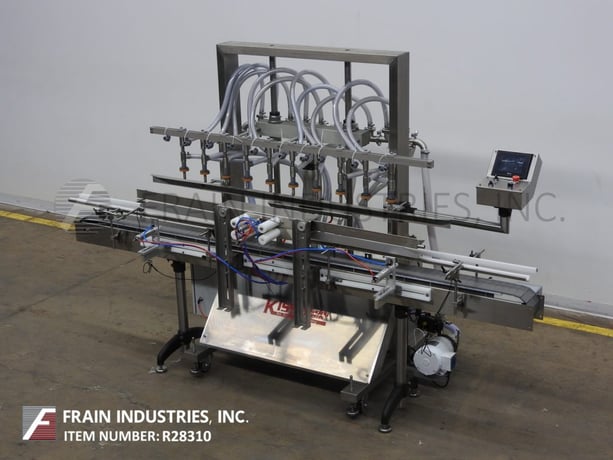
Compare fill range, number of heads, and the production rate on your product. The pictured 10-head Accutek shows an inline overflow arrangement. Before buying a used filling machine, ask which nozzles, pumps, and contact parts are included—and how they are cleaned between products.
Typical Pricing
For used fillers, roughly $2,500–$15,000 is a useful starting budget for many single-head, benchtop, or simpler semi-automatic machines. More substantial automatic fillers commonly move into the $20,000–$75,000 range, while complete filling lines can run $90,000–$225,000 or more. Extra filling heads, sanitary contact parts, servo controls, and included conveyors or cappers push the price up. An older machine with a narrow fill range can cost less, but missing pumps, nozzles, or change parts can quickly eat into the savings.
Labeling Machines
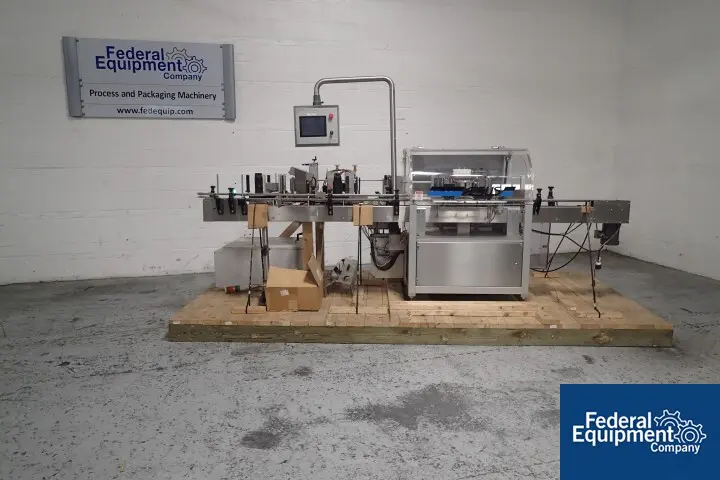
A round bottle needs a different labeling setup than a flat carton or an irregular container. Wraparound labelers handle labels around cylindrical containers; other machines apply front-and-back, top, or bottom labels. Print-and-apply systems add another consideration: the printer and the information it needs to receive.
Check label width and length, container diameter and height, and how the machine holds the package during application. The Aesus shown here is a wraparound labeler. Run your actual labels and containers during a trial to catch wrinkles, poor registration, or a label that peels at the seam before the machine reaches your floor.
Typical Pricing
Budget approximately $1,000–$5,000 for simpler used label applicators and roughly $6,500–$17,000 for many used conveyor-fed wraparound or front-and-back systems. Larger rotary or high-output labelers can reach $50,000–$75,000 or more. For comparison, some new standalone applicators are advertised around $2,500–$7,500 before stands and options. Additional labeling heads, clear-label sensors, printing, and precise product handling raise the cost. Check whether a low-priced offer is a complete labeling station or just the applicator head.
Neck Banders and Cappers
A capper applies or tightens a closure; a neck bander applies the sleeve around a bottle neck that is typically shrunk into place afterward. They may work together, but they do different jobs. Match the machine to the cap style, neck finish, container shape, and closure dimensions you actually use.
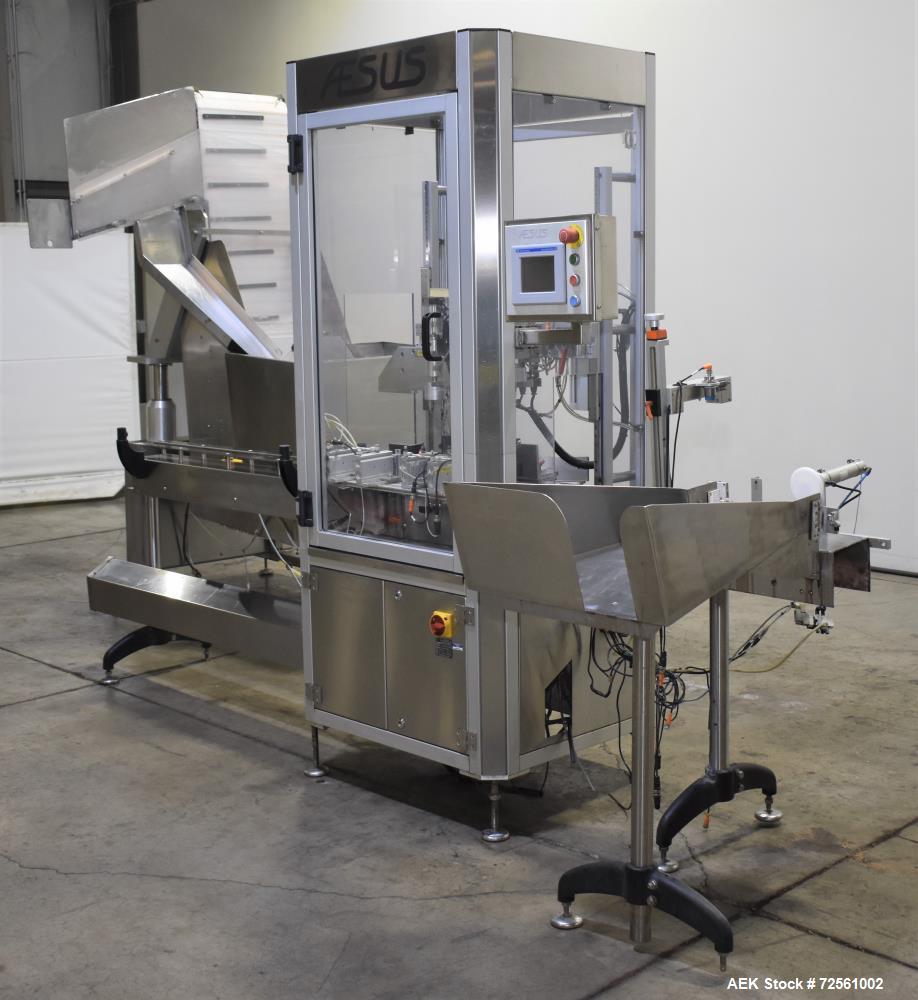
On a used capper, look beyond the advertised speed. Chucks, spindle wheels, container grippers, and cap feeders determine whether your package will run. The pictured Aesus uses a single-chuck arrangement. Ask for a torque check on sample packages and confirm whether the cap sorter—or the heat tunnel for a banding setup—is included.
Typical Pricing
Simpler used cap tighteners and semi-automatic cappers often fall around $1,000–$8,000. More complete inline and rotary capping equipment can run roughly $7,000–$35,000, with specialized rotary systems reaching $65,000 or more. Automatic cap sorting and feeding, extra heads, torque control, and included bottle tooling all add value. For neck banders, compare the applicator and shrink tunnel as a package: a cheap applicator without the needed tunnel or size parts is not the same purchase as a ready-to-integrate system.
Wrapping Machines and Shrink Wrappers
Decide what you want the wrap to do. A shrink wrapper places film around a product and uses heat to tighten it. A stretch wrapper holds a load together by stretching film around it. A flow wrapper forms a sealed film package around individual products. These are very different purchases, even though all are called wrappers.
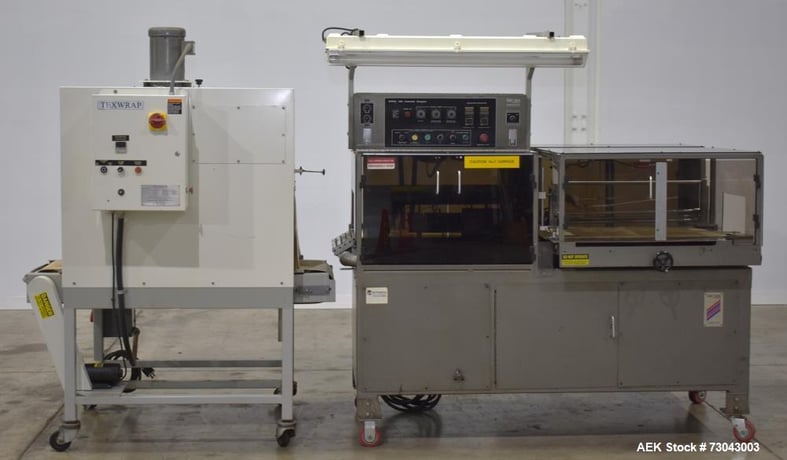
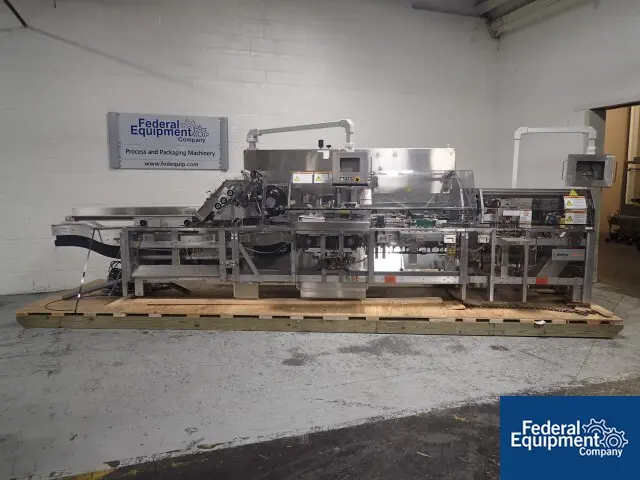
For shrink equipment, compare product dimensions, seal-bar size, film width, and tunnel clearance as a matched system. The pictured L-bar wrapper and tunnel illustrate that pairing. Check what is included in the sale: a wrapper without the right tunnel, conveyor, or film-handling parts may need substantial work before it can package your product.
Typical Pricing
Many used pallet stretch wrappers fall around $2,500–$10,000, while used shrink-wrapping systems with a tunnel commonly call for roughly $9,500–$30,000. Used flow wrappers often sit around $7,000–$40,000; newer, faster automated systems can reach $70,000–$140,000 or more. Small new hooded shrink machines may cost around $4,500–$6,000, but offer a different production level. Package size, automatic feeding, servo controls, and the included tunnel or conveyor explain much of the spread. Compare like-for-like systems rather than a bare sealer against a complete line.
Carton Packaging Machines
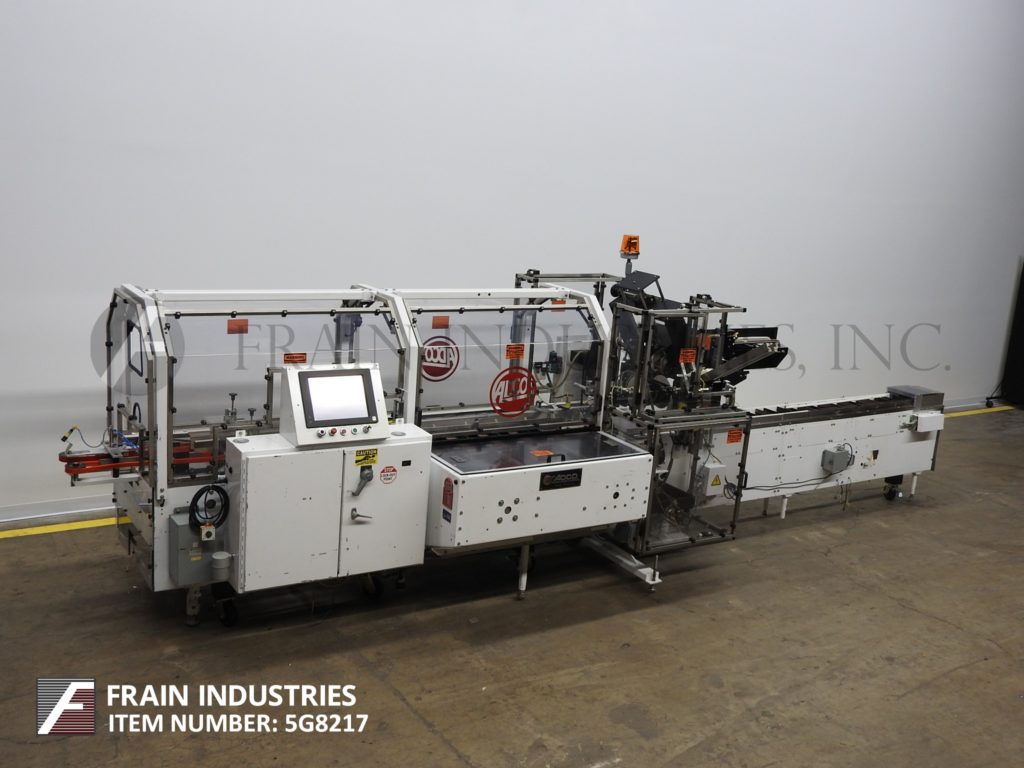
Cartoners turn flat carton blanks into finished packages around your product. The first decision is how the product enters: horizontal loading suits many products that can be pushed in from the side, while other applications need vertical loading. Then consider whether the carton closes with tucked flaps or adhesive.
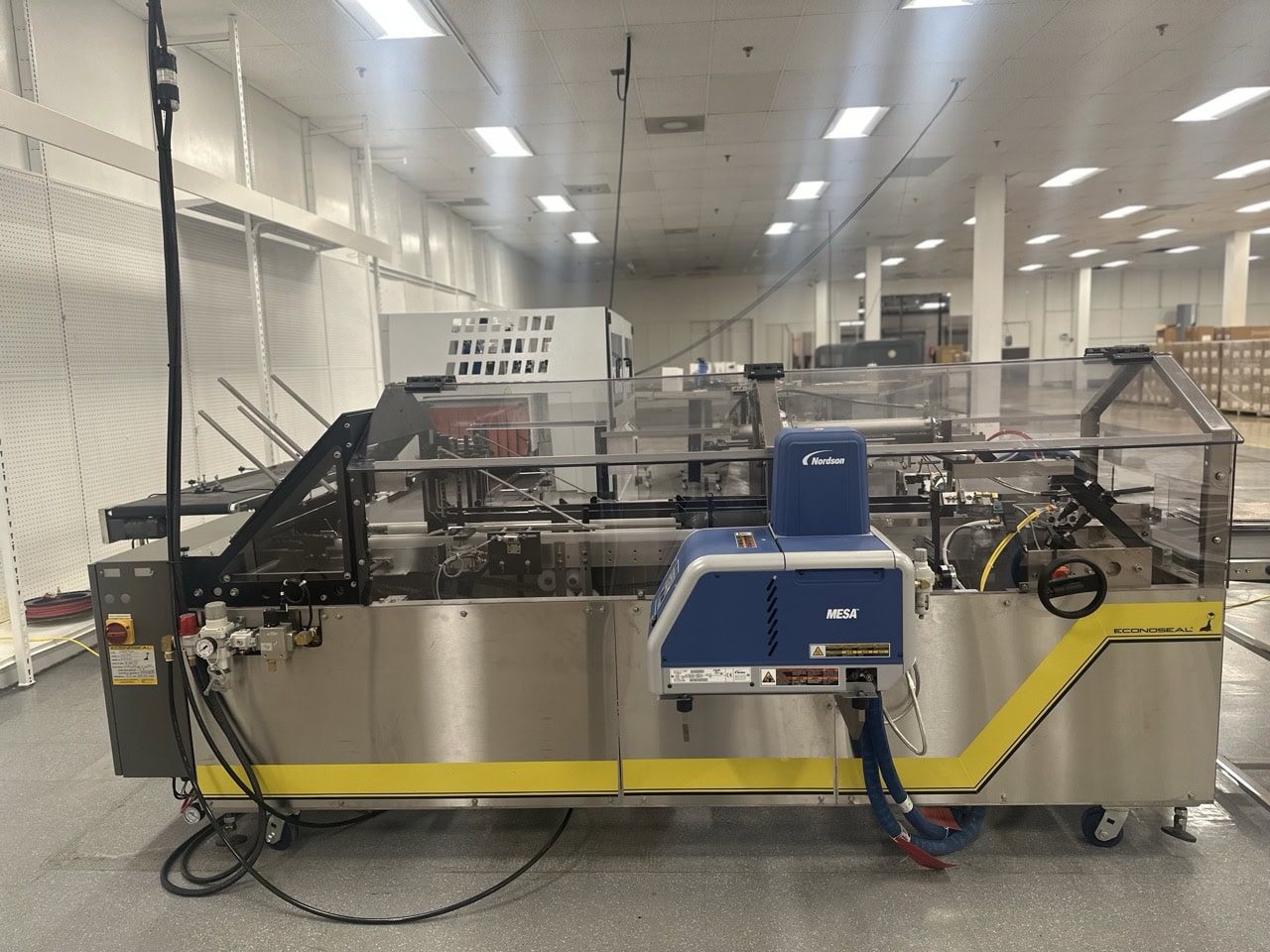
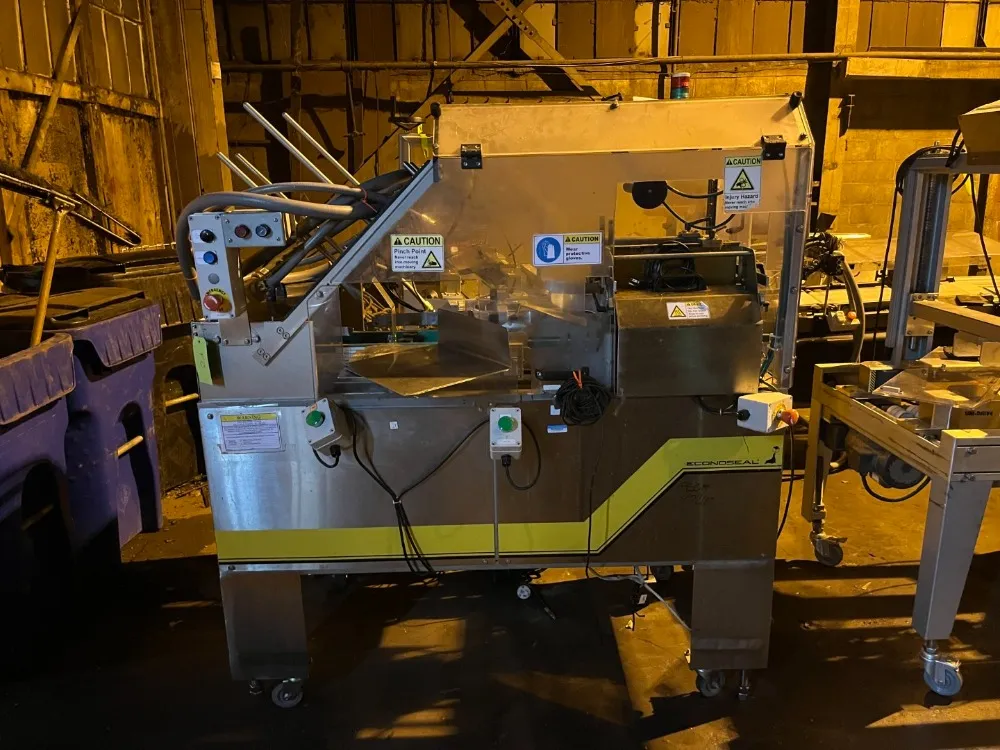
The ADCO shown here is a horizontal hot-melt glue cartoner. Compare minimum and maximum carton length, width, and depth, plus the loading arrangement and cartons per minute. Confirm that the magazine, product buckets, guides, and closing parts fit your carton. A machine that runs one carton beautifully may need costly change parts for your next size.
Typical Pricing
For used cartoners, roughly $6,000–$40,000 covers many older, simpler, or semi-automatic options. Fully automatic systems with more sophisticated product loading can run $75,000–$150,000 or more, and recent demonstration machines can approach $200,000. Speed, automatic infeed, glue equipment, controls, and multiple sets of carton tooling raise the price. A basic manual-load machine is usually cheaper, but allow for its labor needs. Low-priced case tapers and box dumpers sometimes appear in broader packaging inventory; they are not substitutes for a cartoner.
Form Fill Sealing Machines
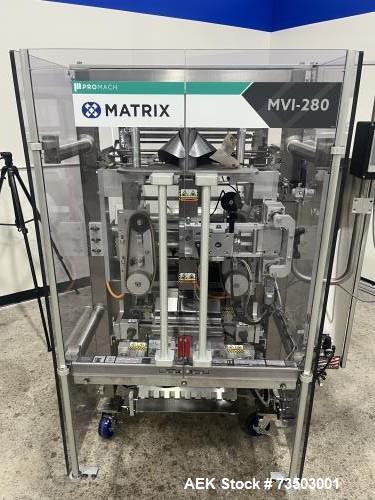
Form-fill-seal equipment makes a package from film, fills it, and seals it. Vertical form-fill-seal machines commonly drop product into a bag formed around a tube. Horizontal systems handle other product and pouch arrangements. A premade-pouch filler starts with an already-made pouch, so be clear about which process you want.
Bag width and length, film compatibility, forming tools, and the filling device should lead the comparison. The pictured Matrix is a vertical system. Verify whether a weigher, auger, or liquid filler comes with the machine; the bagger alone may not include one. Ask for a trial with your film and product, especially when seal contamination or fragile products are concerns.
Typical Pricing
A practical starting range for many used form-fill-seal machines is about $10,000–$40,000. Older basic baggers can be below that, while more elaborate bagging systems can exceed $100,000; specialized high-output equipment may cost several hundred thousand dollars. Bag format, lane count, filling accuracy, servo controls, and included weighers or augers drive the price. Establish exactly what is included before comparing offers: a bagger alone is a different purchase from a system with product feeding, weighing, coding, and discharge equipment.
Sealers and Sealing Systems
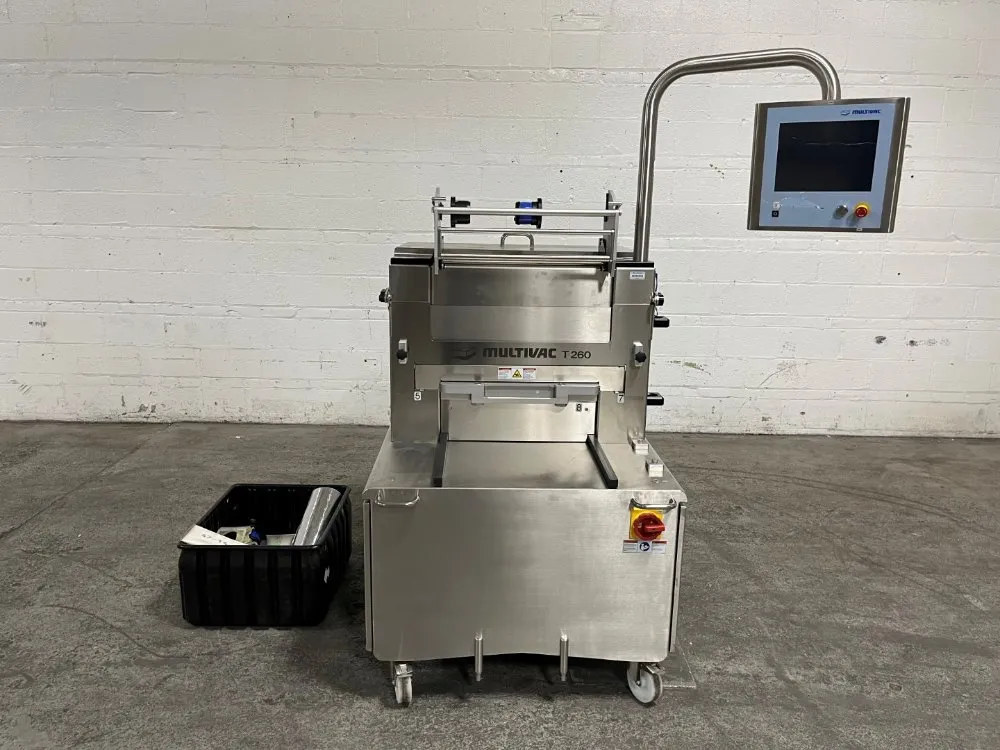
“Sealer” covers a lot of equipment. A tray sealer attaches film to a tray, a bag sealer closes a flexible package, an induction sealer bonds a compatible liner to a container, and a case sealer closes a shipping carton. Start with the package and the closure you need, then narrow the machinery search.
The Multivac pictured here is a tray sealer. Compare the tooling layout, usable sealing area, film and tray compatibility, and cycles per minute. One cycle can seal more than one package, depending on the tooling. Do not assume vacuum or gas-flush capability is included; confirm the exact configuration and test seal quality with your packaging materials.
Typical Pricing
Simpler used bag and heat sealers often start around $500–$5,000, with heavier-duty continuous or specialized pouch sealers around $5,000–$11,000. Used tray and cup sealing equipment can range roughly $6,000–$30,000 for the kinds of standalone machines covered here; larger automated packaging systems can cost considerably more. New compact band sealers are also available in the low thousands. Sealing area, tooling, conveyor handling, vacuum or gas-flush capability, and controls affect the price. Check that the dies match your tray—replacement tooling can be a significant extra.
Key Packaging Machinery Specifications to Compare
Package dimensions, fill range, production speed, head or lane count, and sealing or tooling size are the specifications that matter most across these categories. A machine’s advertised maximum speed will not help if your bottle is too tall, your bag too wide, or your carton outside its tooling range. Check out more details on the key packaging machinery specs below!
Package Size and Working Range
Write down your smallest and largest packages, including caps, flaps, and any product that protrudes. Compare those dimensions with the machine’s usable range—not just its overall footprint. For a cartoner, check all three carton dimensions. For a labeler or capper, check container diameter, height, and stability. For a wrapper, check the product, seal area, and tunnel opening together.
Leave room for the package to move through the machine correctly. A product that barely fits through an opening may still need clearance for film, guides, or the sealing cycle. Have the seller or manufacturer confirm the fit using your samples and drawings.
Fill Volume, Product Behavior, and Contact Parts
For fillers, compare the required ounces, milliliters, pounds, or gallons with the machine’s actual filling range. Then discuss the product itself. Thick cream moves differently from water, and a powder can bridge or dust. Foaming liquids and products with particles may need different nozzles, pumps, or filling methods.
Check contact-material compatibility and the cleaning procedure. Stainless construction alone does not establish that a machine is suitable for your food, chemical, or personal-care product. Ask about previous service, seals, hoses, disassembly, and any application-specific requirements.
Production Speed You Can Sustain
Bottles per minute, cartons per minute, bags per minute, and cycles per minute are not interchangeable. A tray sealer may process several trays in one cycle, while a conveyor specification in feet per minute says little about finished-package output without knowing product spacing. Ask what package and operating conditions produced the quoted rate.
Work backward from your required good packages per shift, allowing for loading, replenishing film or cartons, cleaning, changeovers, and stoppages. More filling heads or lanes can increase capacity, but the slowest station can still set the pace for the whole line. A realistic demonstration is more useful than a maximum-speed number by itself.
Tooling, Film, and Change Parts
A used packaging machine often arrives set up for its previous owner’s package. Forming tubes, sealing dies, cap chucks, carton buckets, guide rails, and label-handling parts may all be size-specific. Get an itemized list of what comes with it and a quote for anything your packages require.
For film equipment, confirm the material structure, roll dimensions, and sealing requirements. For cartoners, send actual blanks; for cappers, send bottles and closures. If you run many sizes, ask to see a changeover and find out how adjustments are recorded. The time between good runs can matter as much as top speed.
Utilities, Controls, and Line Fit
Compare nameplate voltage, phase, and electrical load with your plant supply. Check compressed-air pressure and demand, and any vacuum, cooling, extraction, or gas requirements. Include maintenance clearance, operator access, conveyor height, and product travel direction when measuring the available space.
Ask whether the control panel is complete, the touchscreen works, and program backups and manuals are available. Older controls can be serviceable, but unavailable components or missing software can complicate repairs. Before connecting machines, have a qualified integrator review the communication, guarding, and stop arrangements for the whole line.
What to Check Before Buying Used Packaging Equipment
The best trial uses your product and your packaging materials. Watch a sustained run rather than a few empty cycles. Look at fill consistency, cap application, label placement, carton closing, and seal quality as relevant to the machine. Keep some finished samples for inspection instead of judging everything while it moves past on the conveyor.
Look for worn belts and rollers, damaged sealing surfaces, product buildup, leaks, loose guides, and signs of makeshift repairs. Ask a qualified technician to assess guarding, interlocks, electrical condition, and controls. If the machine cannot run, make that uncertainty part of the buying decision and obtain a realistic recommissioning estimate.
Finally, price the machine as an installed piece of equipment. Freight, crating, rigging, utilities, replacement wear parts, tooling, and commissioning can change the economics considerably. Confirm the scope of supply, removal arrangements, and any seller warranty or return terms in writing.
Packaging Machinery Buyer’s Checklist
- Define the package: product characteristics, container or bag dimensions, closure, film, label, and carton samples.
- Set a practical output target: good packages per shift, not just the advertised maximum rate.
- Confirm the configuration: filling method, loading direction, sealing process, and upstream or downstream equipment.
- Inventory the included parts: tooling, feeders, conveyors, pumps, guards, manuals, and control backups.
- Request a product trial: use your materials and inspect finished packages for consistent quality.
- Check installation costs: utilities, floor space, freight, rigging, integration, and change parts.
Frequently Asked Questions
A complete line can simplify the search when its package format and capacity match your needs. Individual machines make sense when replacing a bottleneck or assembling a more specific process. Either way, confirm that the equipment actually works together; being sold as a line does not guarantee it is ready for your product.
Often, yes—but within a defined range and usually with adjustments or change parts. Ask which sizes it currently runs, which tooling is included, and what is needed for each of your packages. Check changeover time as well as physical fit.
A filler dispenses product into a container or package. A form-fill-seal machine also creates the package from film and seals it. Its dosing system may be separate, so confirm whether the quoted equipment includes the filling component you need.
No. Shrink wrapping uses heat to tighten compatible film around a product or bundle. Stretch wrapping tensions film around a load, commonly a pallet. Choose according to the package and purpose rather than treating the names as interchangeable.
Prices depend on machine type, size, speed, age, condition, controls, and included tooling. Compare equipment with a similar configuration, then add the cost to make it run your product. A lower asking price can be offset by missing feeders, expensive change parts, or controls work.
Popular Packaging Machinery Listings
Explore current equipment in the categories covered above. Availability and specifications vary; contact the seller to confirm the configuration and fit for your application.
Fillers, Labelers and Cappers
Popular equipment based on listing views over the past month.
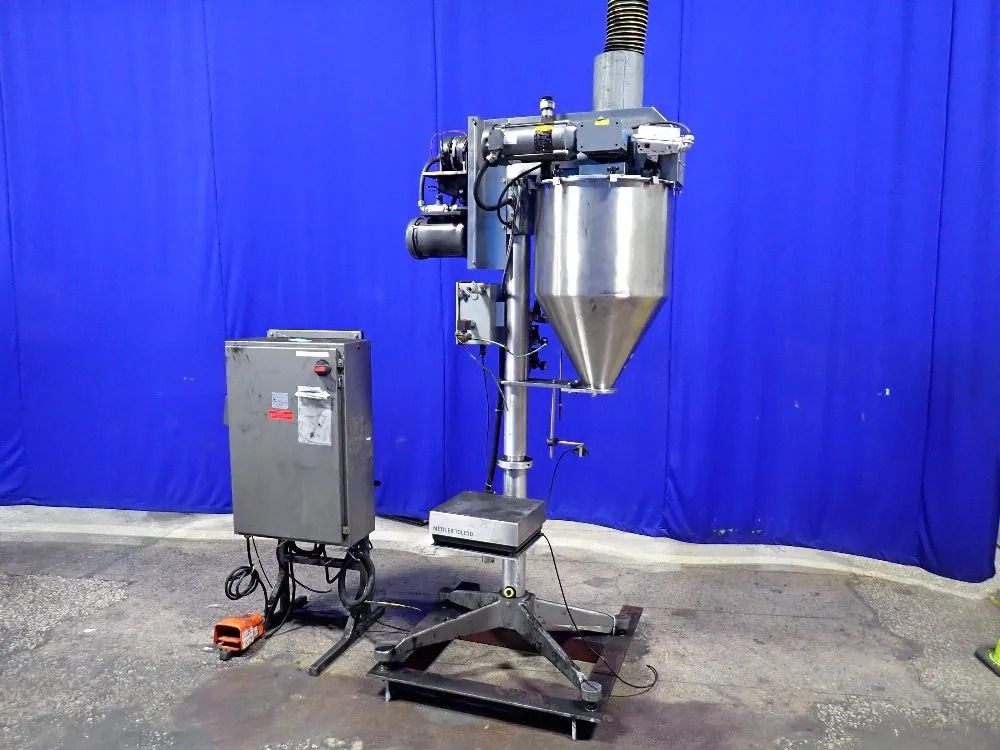
Per-Fil #PF-11W, Filler, w/Foot Switch, 20" x 29" capacity, 4 Amps, 460 V.
Filling Equipment (Fillers)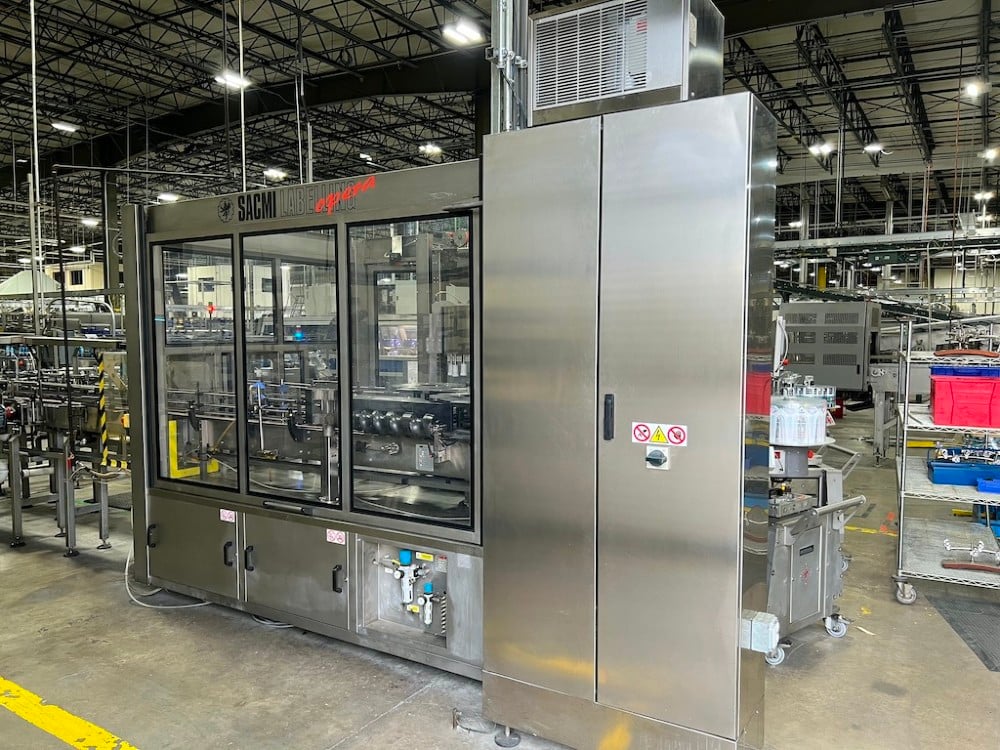
Sacmi #Opera-400, pressure sensitive labler
Labeling Machines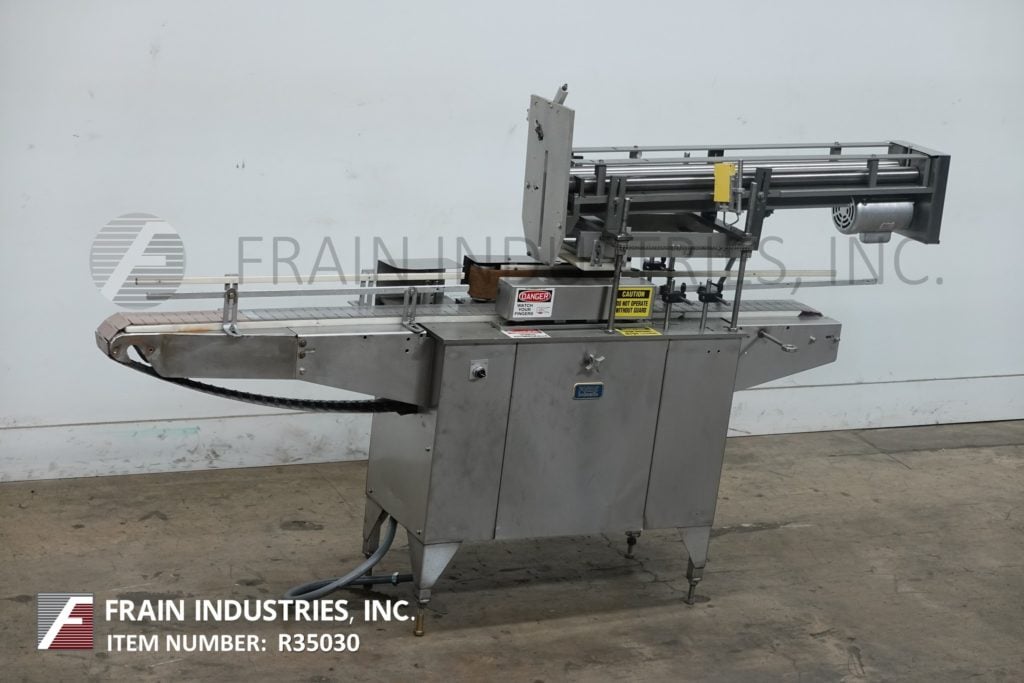
Holmatic / Oystar #PH-41SB, automatic, vertical snap, over lid applicator, 20-150 containers per minute, Stainless Steel and anodized aluminum construction
Neck Banders and Cappers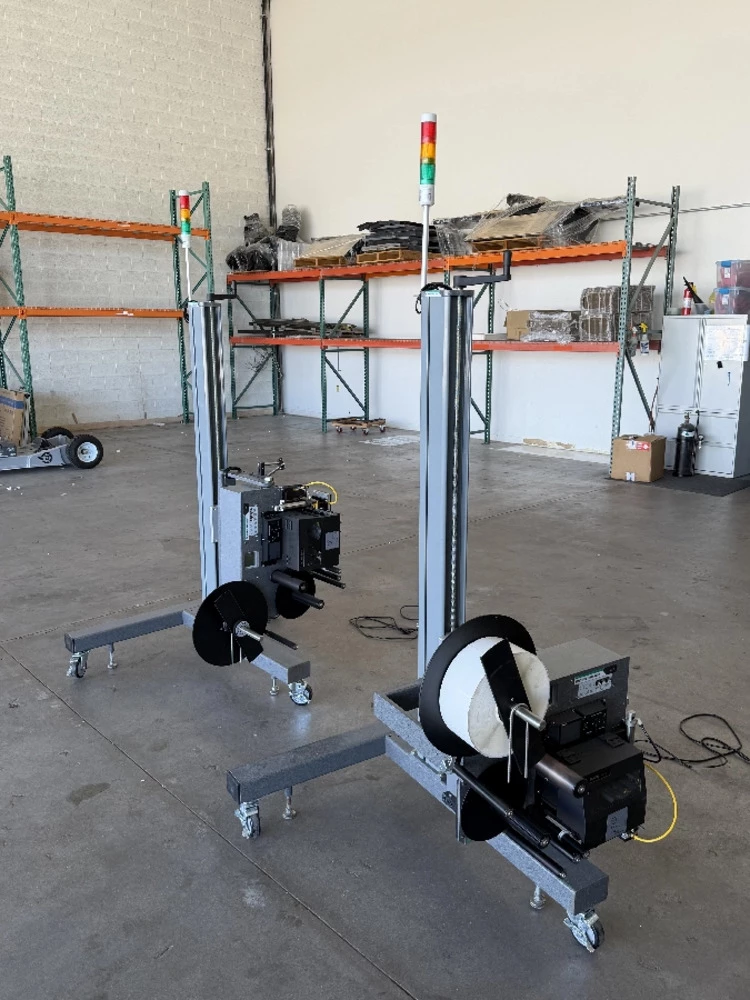
ID Technology #252, Printer Applicator, 2025, (2 available)
Labeling Machines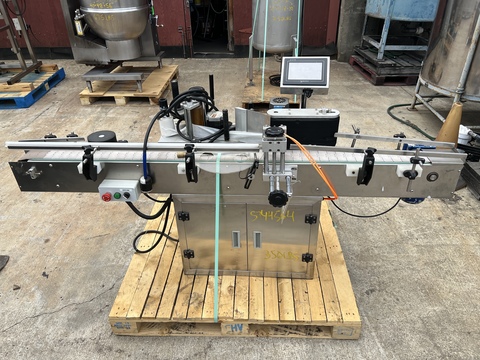
American Packaging #ALM-Twister, Wrap Around Pressure Sensitive Labeler, 4" width x 60" L pass thru belt conveyor, set up for 9" L x 2.5" H label, 20-22 labels/min., 6" max label height, 220 V
Labeling Machines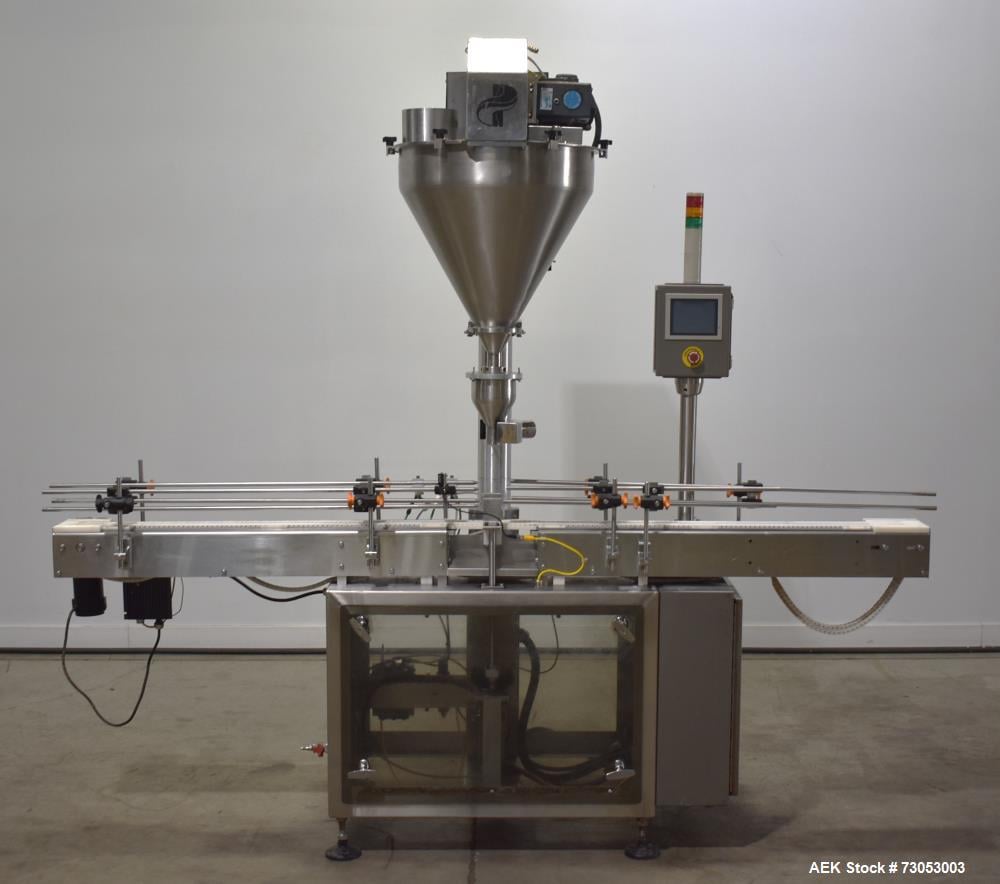
Per-Fil #PF-23, Single Head Auger Filler, w/ Conveyor, 0.5g to 10kg, 230 V., Mitsubishi Control, 10-40 CPM, 2003
Filling Equipment (Fillers)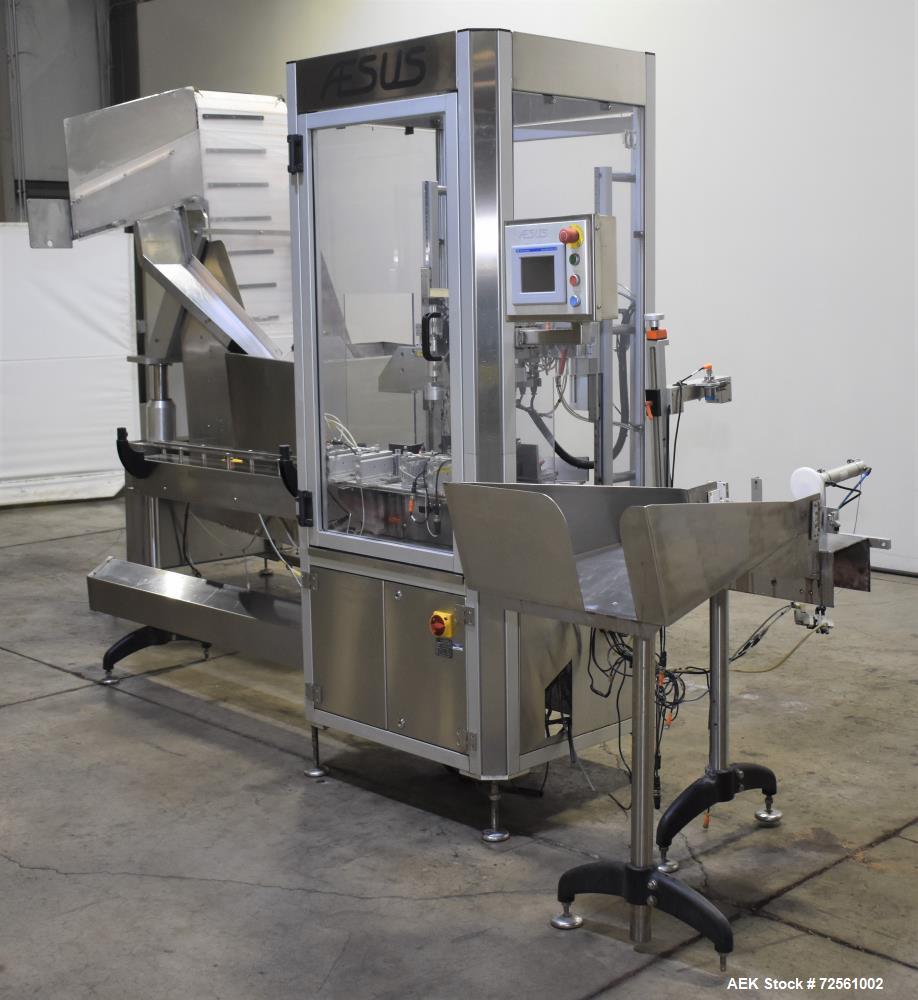
Aesus #Delta, Chuckcap Automatic Single Chuck Capper, 60 CPM, 5" diameter x 1" thick Capacity size, 10" diameter x 12" tall Bottle size, 208 V
Neck Banders and Cappers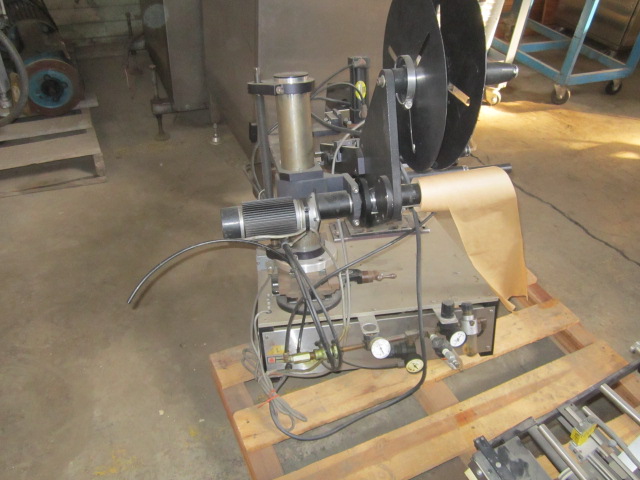
Avery #1101-6, Pressure Sensitive Labeler, 6" web width, 115 V
Labeling Machines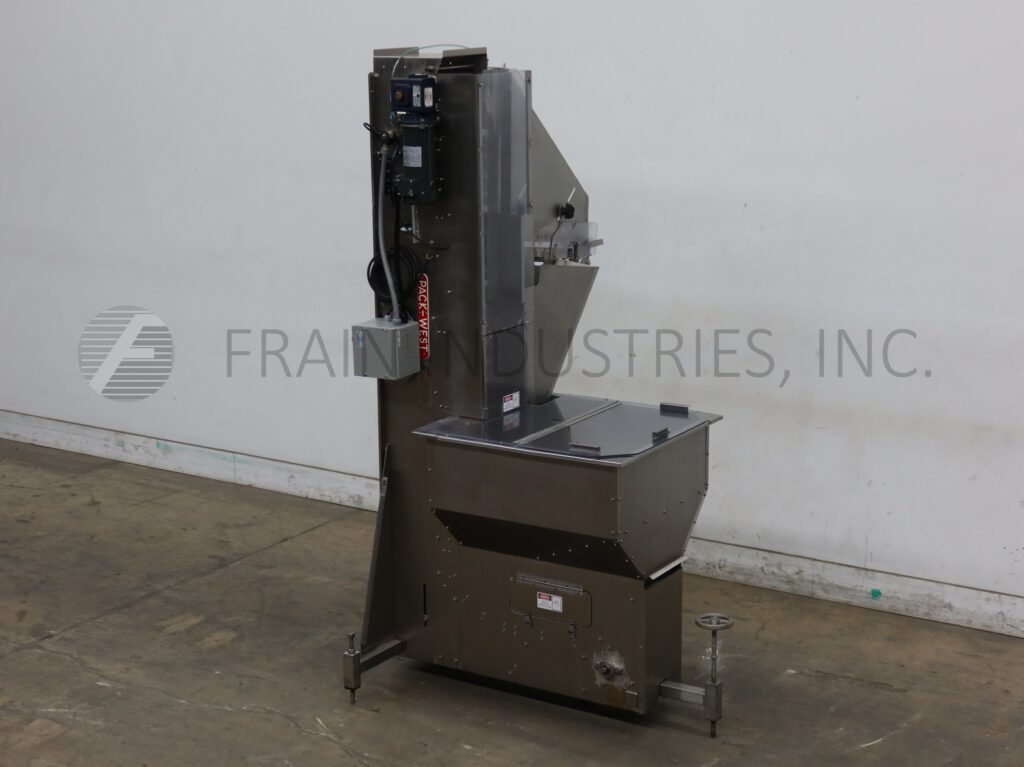
Pack West #CESF, automatic Stainless Steel water fall style capacity elevator / feeder & sorter, 50-300 caps per minute, mounted on a Stainless Steel base frame w/leveling pads
Neck Banders and Cappers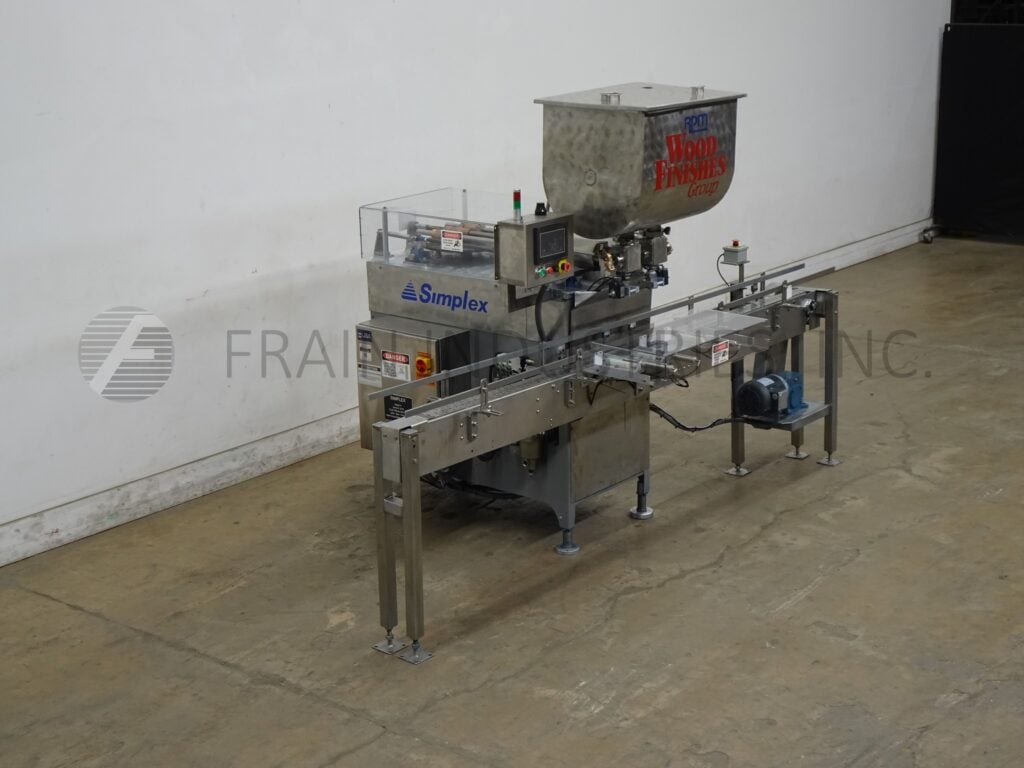
Simplex #F, inline, 2 head piston filler, rated at speeds 2-20 containers per minute, 16-128 ounces
Filling Equipment (Fillers)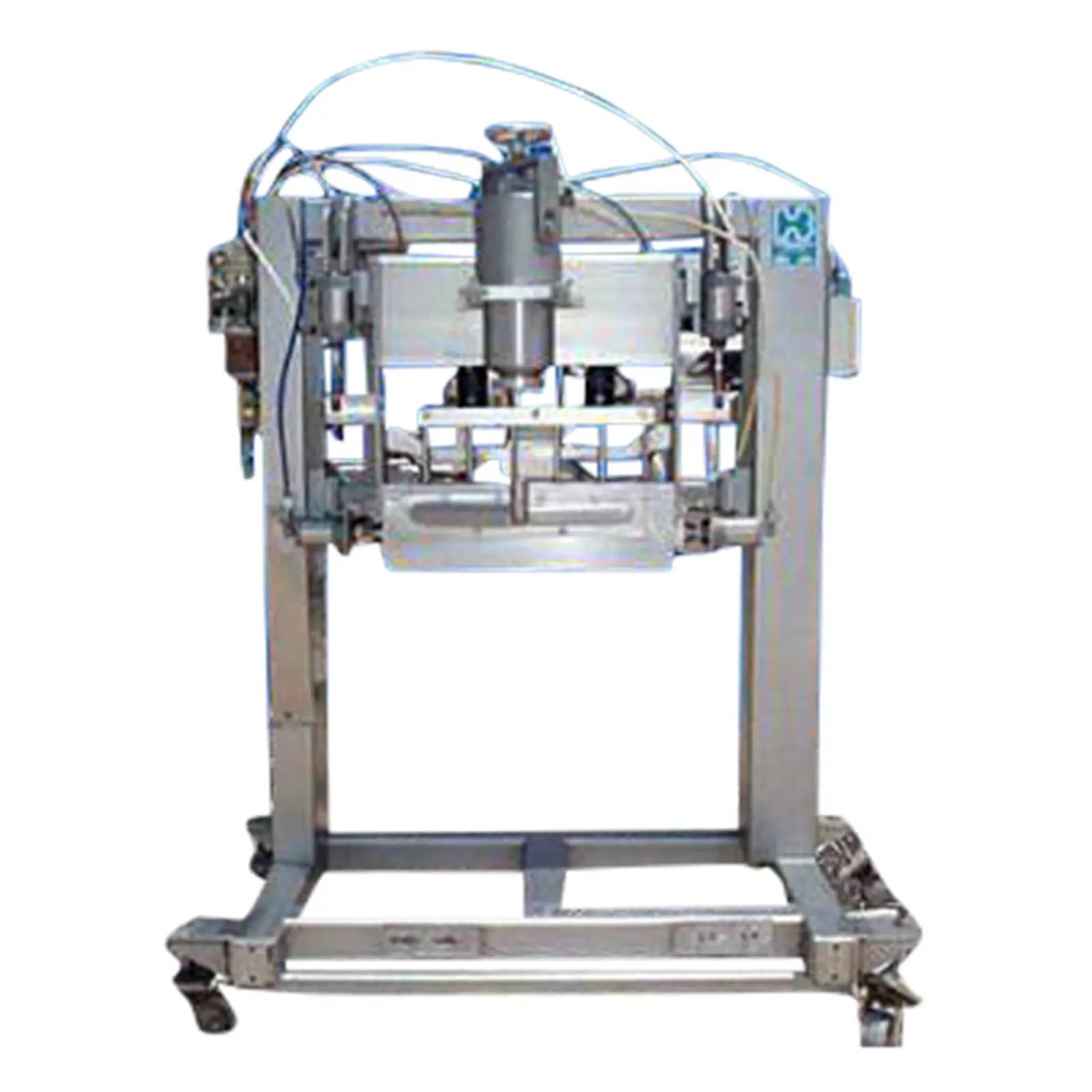
Hinds Bock Corporation #18P-01, 18-Slot Dosing Filler, 1 oz filler capacity, 1/8" diameter Valve, 1/2 gallon infeed pressure Tank, 120 psi
Filling Equipment (Fillers)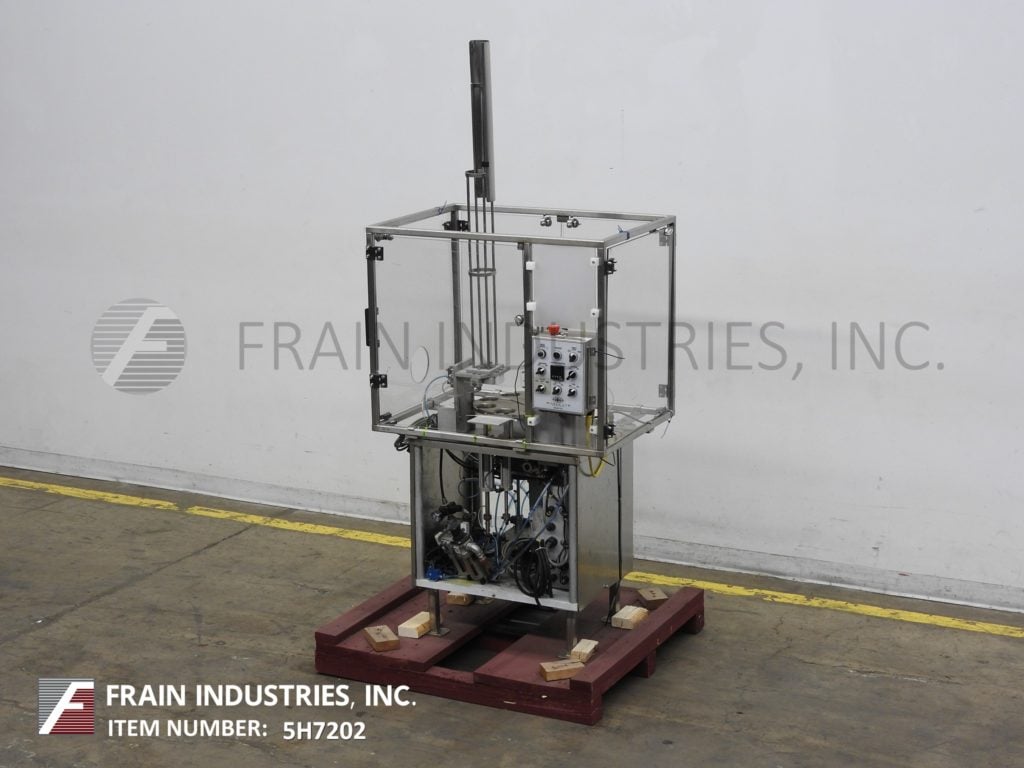
World Cup #8-12, automatic, intermittent motion, 8 pocket, Stainless Steel, rotary cup denester, filler, pre-cut lid applicator and heat sealer rated from 8-45 cups per minute
Filling Equipment (Fillers)
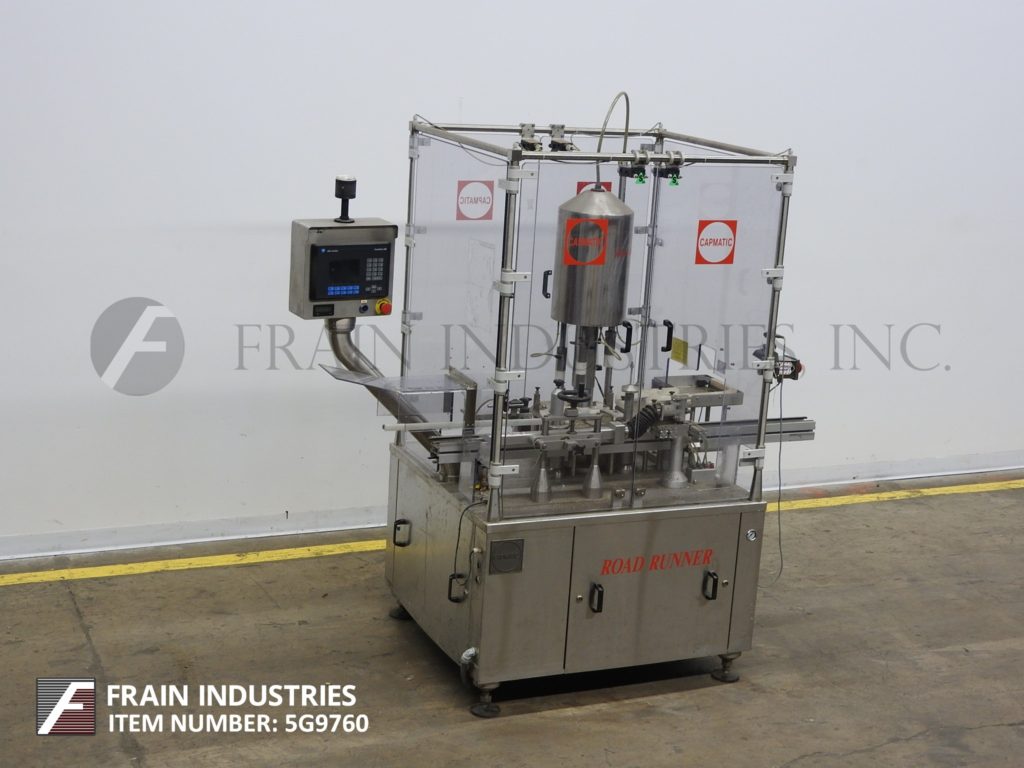
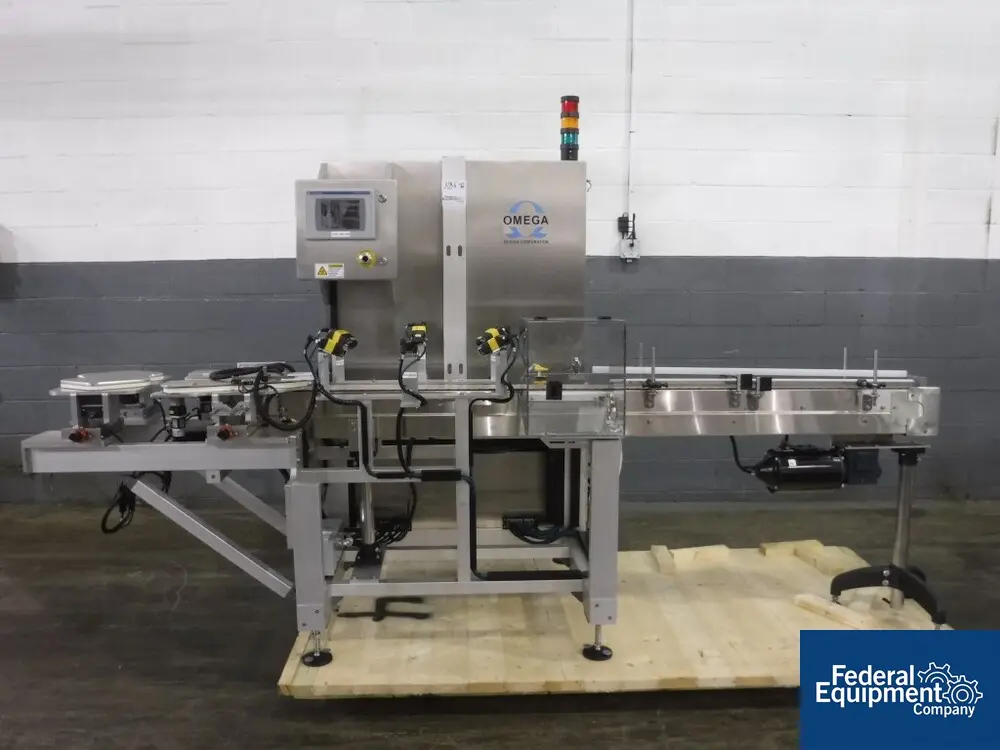
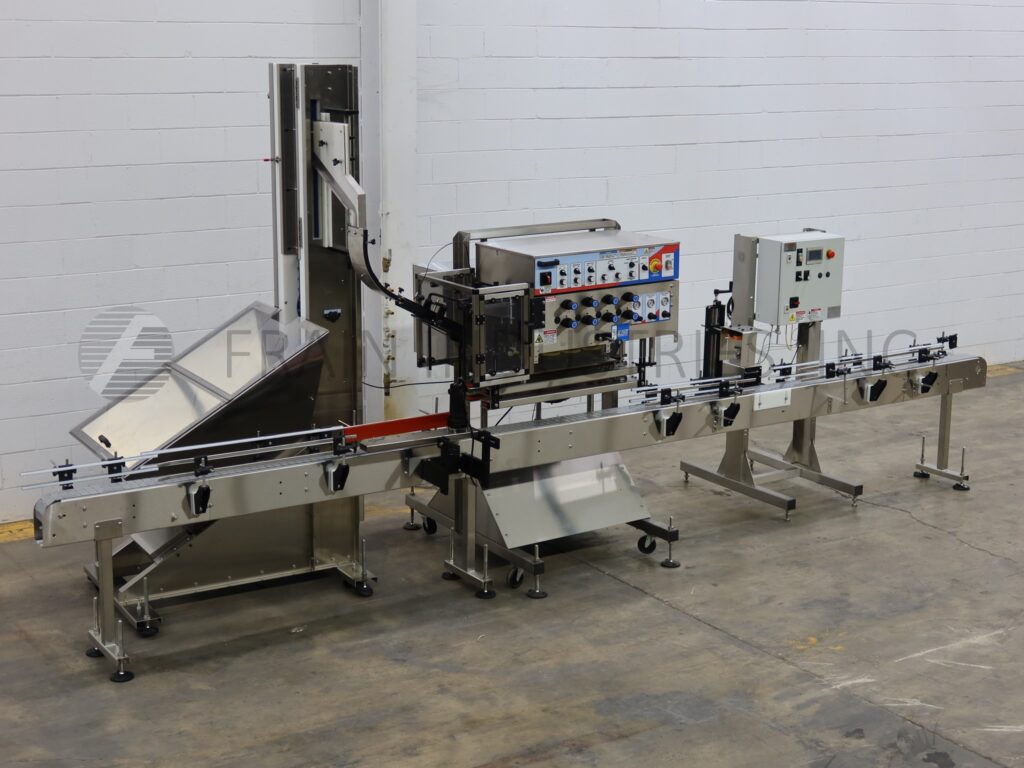
Wrappers and Cartoners
Popular equipment based on listing views over the past month.
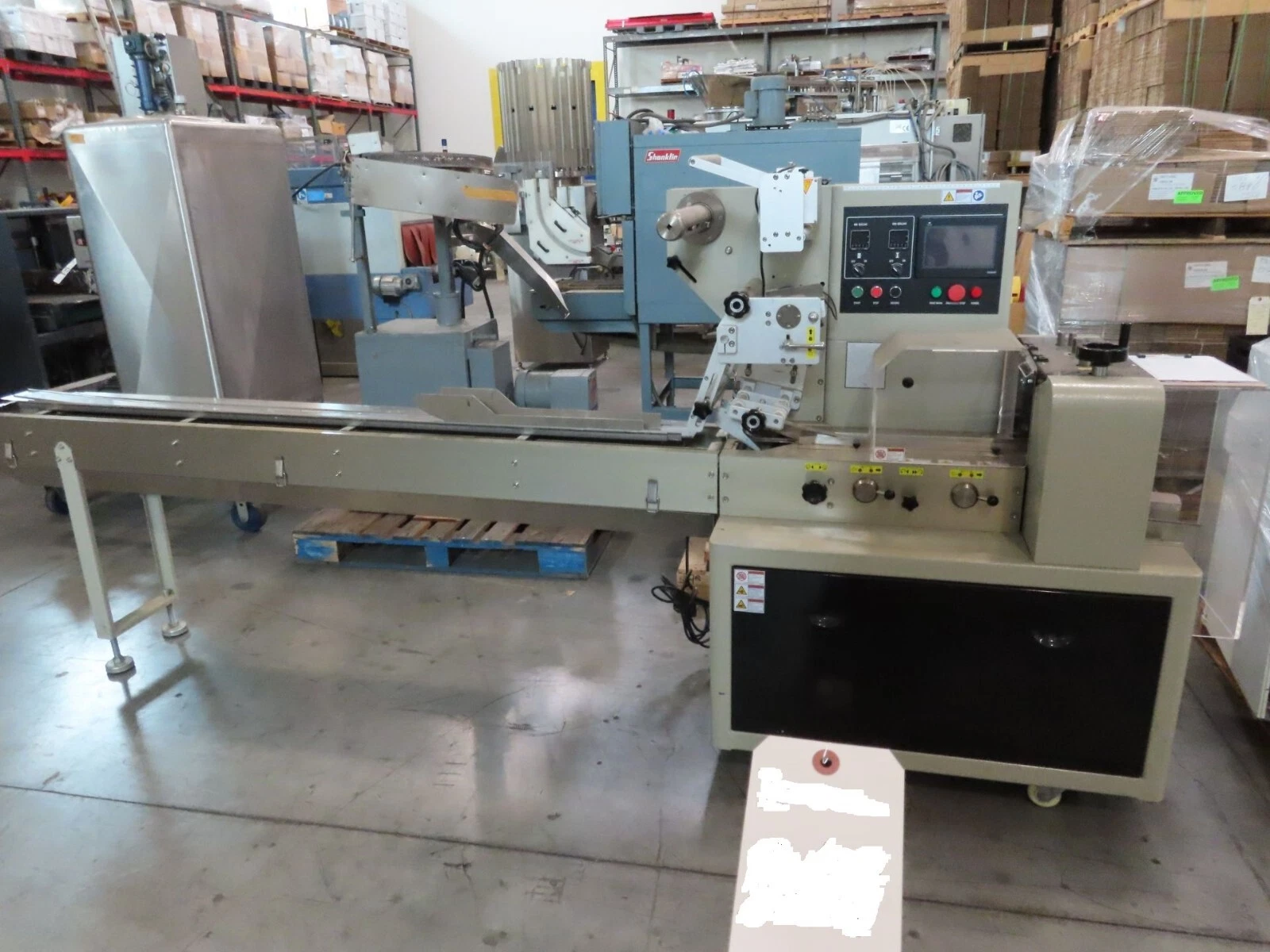
Excell Packing C-Series #C-250, horizontal flow wrapper, 2018
Wrapping Machines (including Shrink Wrappers)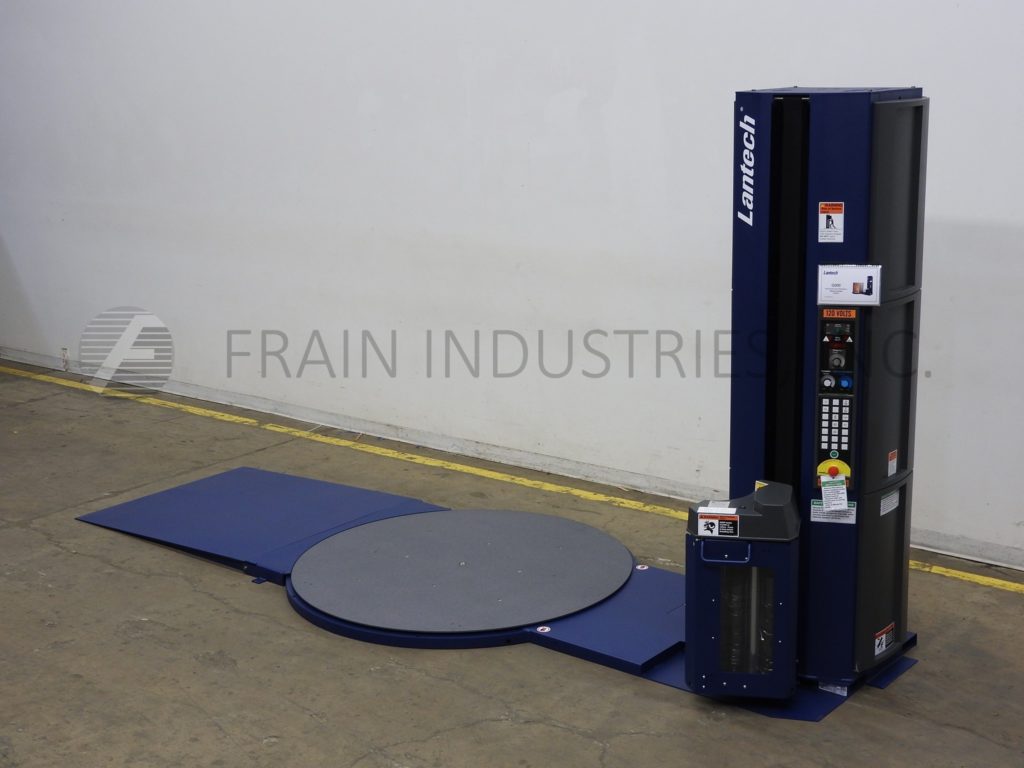
Lantech #Q-300, semi automatic, low profile, column style stretch wrapper, rated from 5-35 pallets per hour, with loading ramp
Wrapping Machines (including Shrink Wrappers)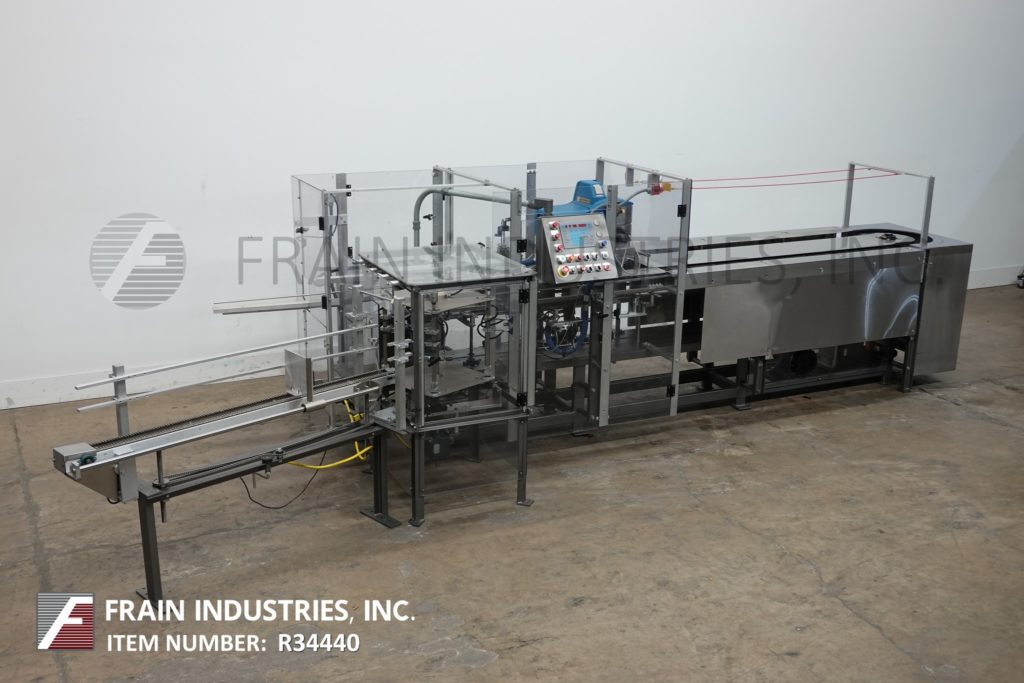
Clybourn #CHL7, semi-automatic, vertical, hand load, hot melt glue cartoner, 10-100 cartons per minute, Nordson ProBlue hot melt glue system, major & minor flap closures
Carton Packaging Machines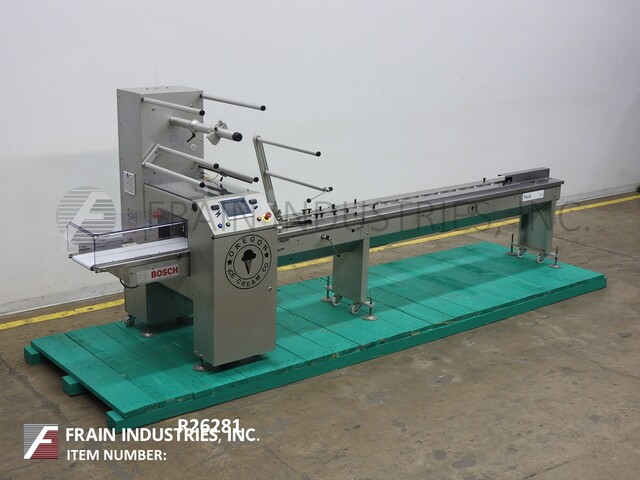
Bosch #PACK-101, 2-up, horizontal, wrapper rated from 50-150 packages per minute, 56" long lugged infeed conveyor, pop out lugs, adjustable former
Wrapping Machines (including Shrink Wrappers)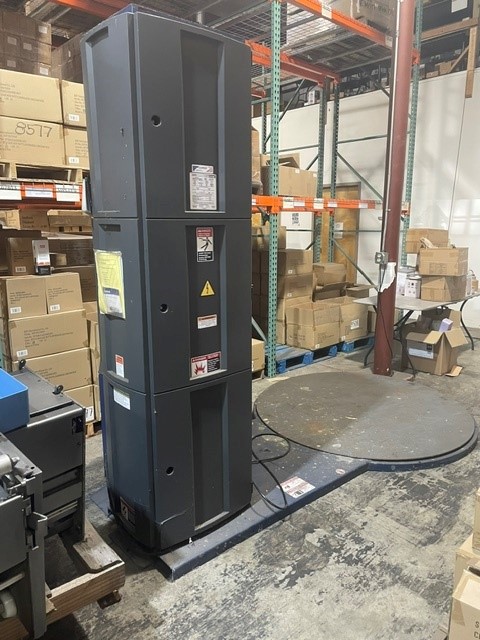
Lantech #Q-300, pallet wrapper, 25-35 loads/hour, vari-turntable speed, 12 RPM, 65" dia turntable
Wrapping Machines (including Shrink Wrappers)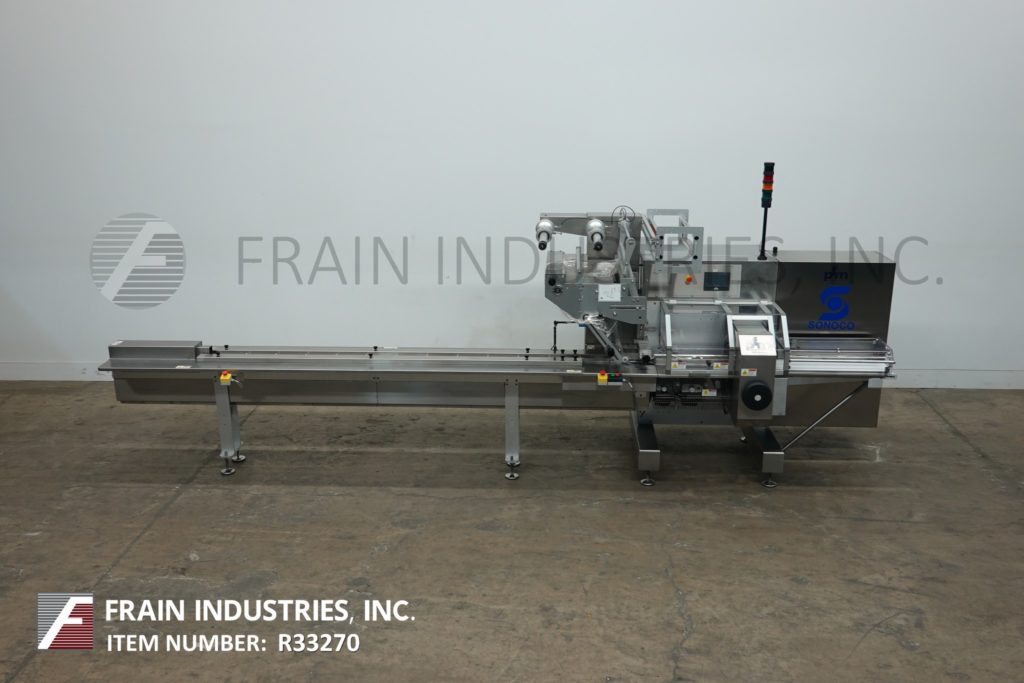
PFM #Falcon, 2-up, automatic, 3-Axis, servo driven, horizontal flow wrapper, 50-200 products per minute, mounted on base Stainless Steel frame with leveling legs
Wrapping Machines (including Shrink Wrappers)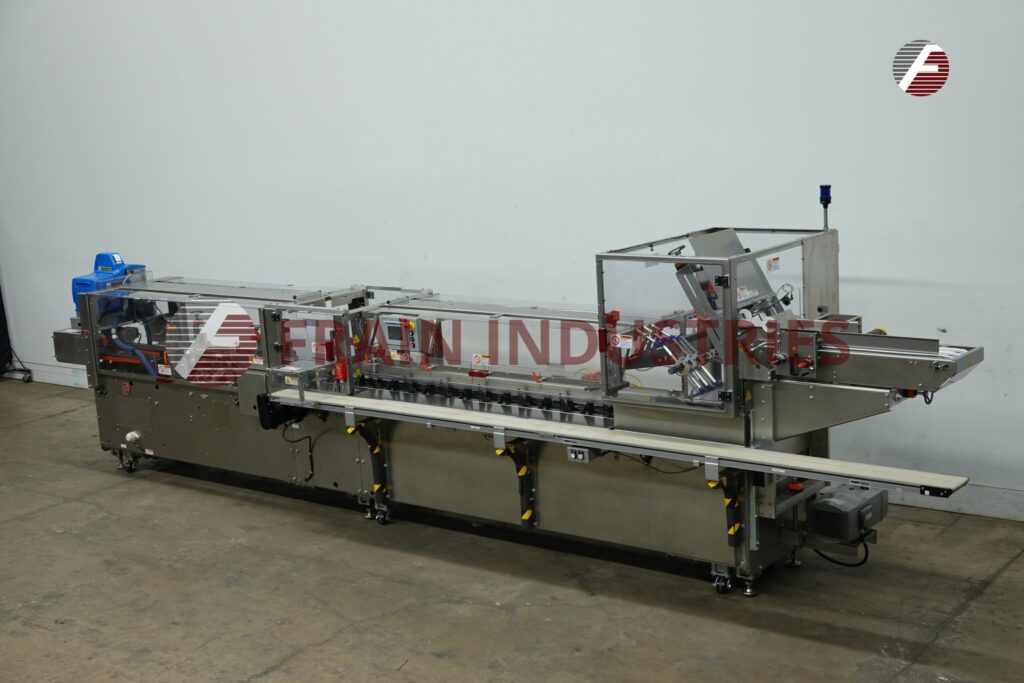
Adco #15D105SS, Stainless Steel semi-automatic horizontal hot melt glue cartoner, 25-120 cartons/minute, mounted on Stainless Steel frame with casters
Carton Packaging Machines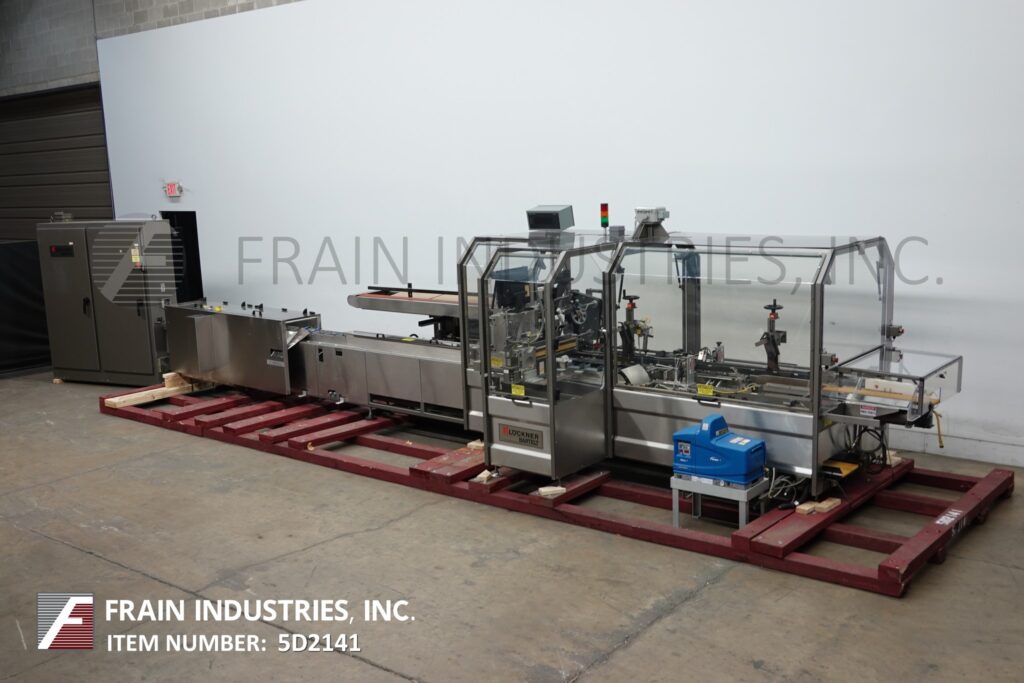
Klockner #IMC/S, automatic intermittent motion, 2 station axis servo driven horizontal cartoner capable of speeds from 30-65 cpm
Carton Packaging Machines
Lantech G-SERIES, stretch wrap machine, 65" diameter turntable, 20" film width, 2026, new
Wrapping Machines (including Shrink Wrappers)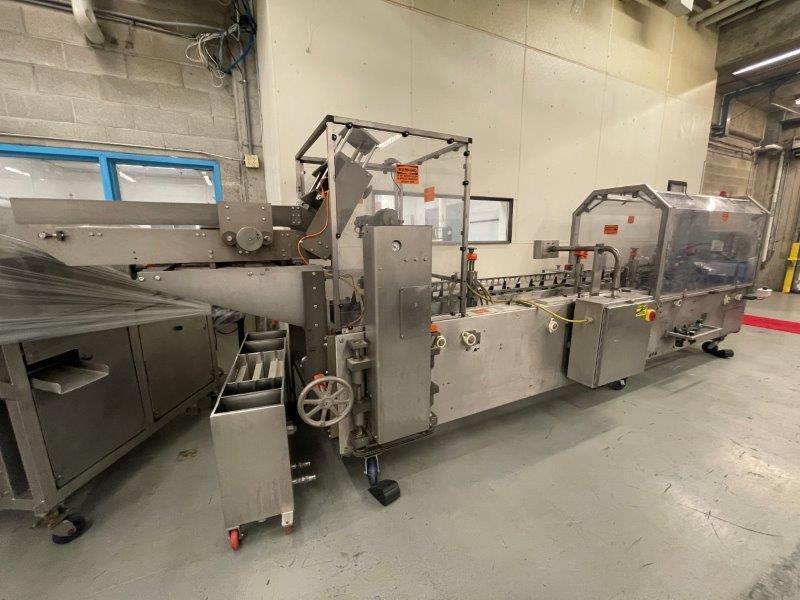
Adco #15D105-SS, semi-auto horizontal hot melt glue cartoner, 125 per min, 2000
Carton Packaging Machines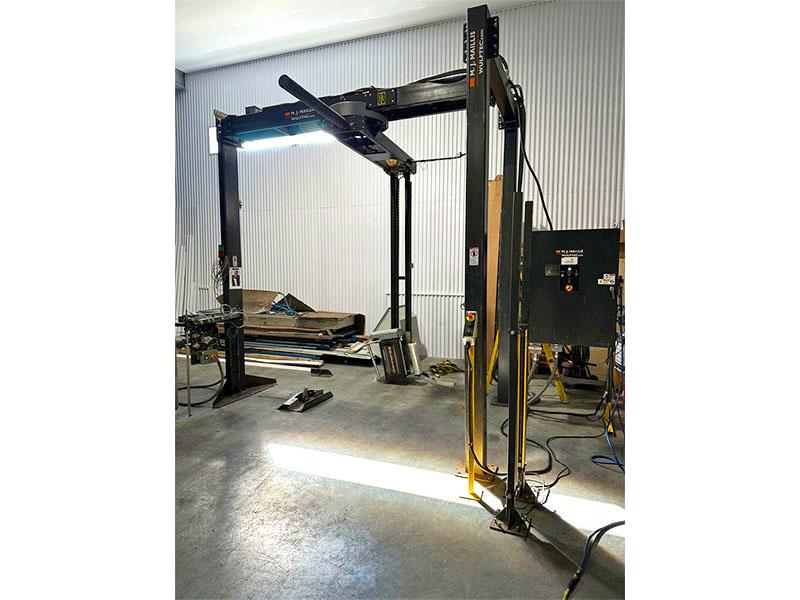
Wulftec #WRTA-175, automatic rotary stretch wrapping machine, Allen Bradley Micro800 Series PLC
Wrapping Machines (including Shrink Wrappers)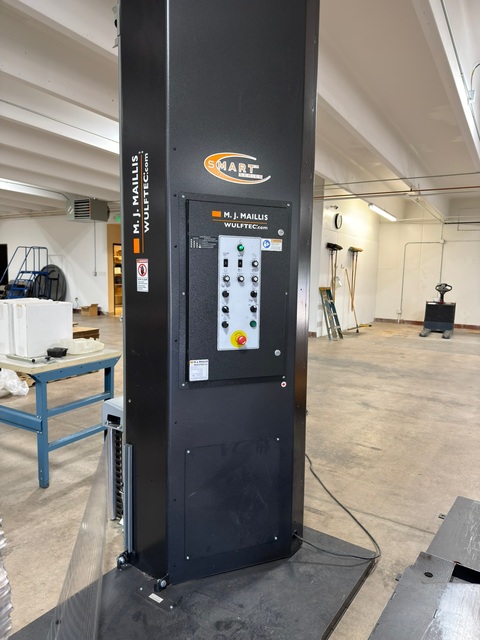
Wulftec #WSML-150-S, shrink wrapper with secondardy platform for rolling up with a pallet jack
Wrapping Machines (including Shrink Wrappers)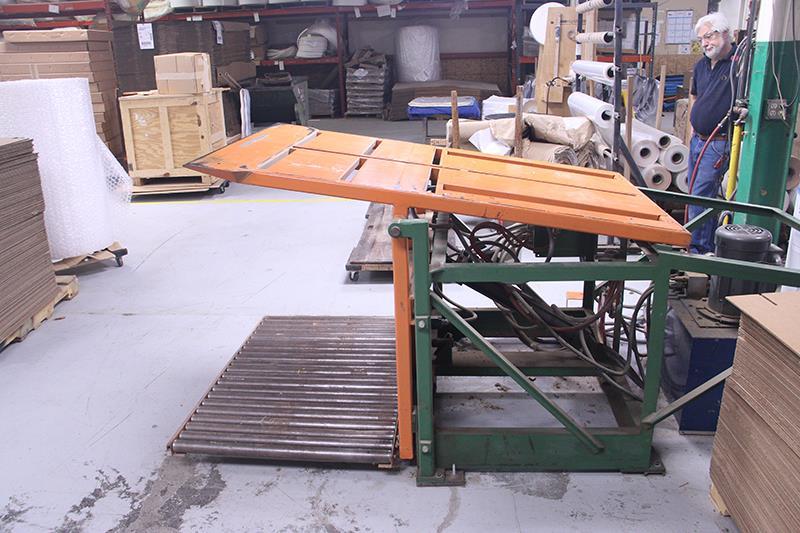
Form Fill Seal Machines and Sealers
Popular equipment based on listing views over the past month.
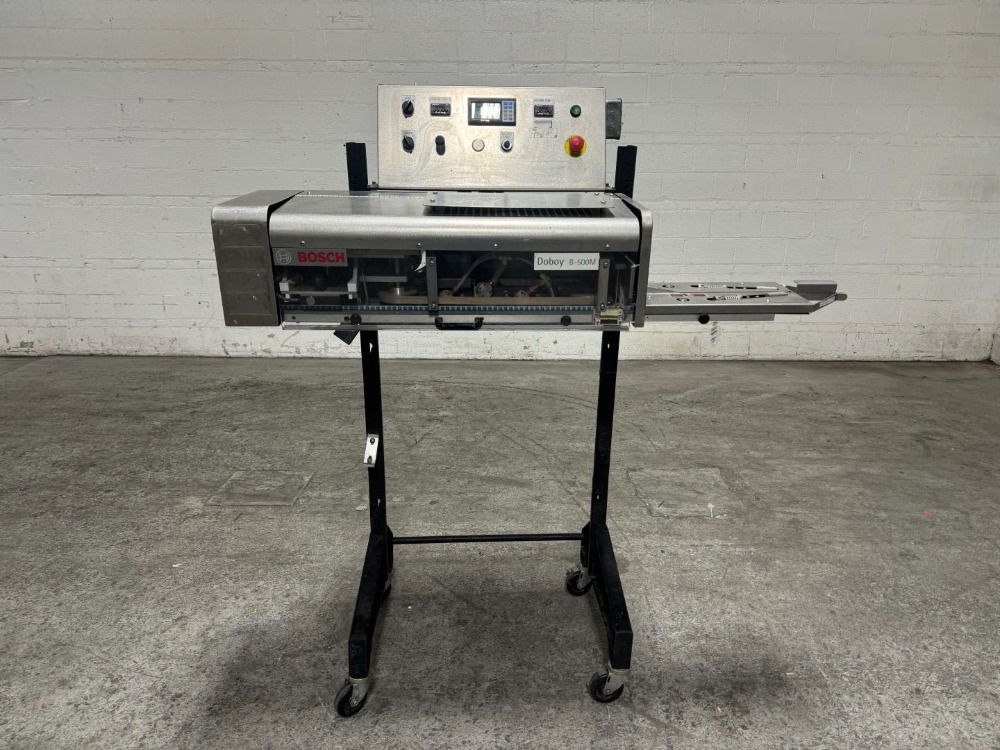
Bosch Doboy #B-500M, Bag Sealer, 115 V, Belt Feed, w/Controls, On Stand, 2005
Sealers and Sealing Systems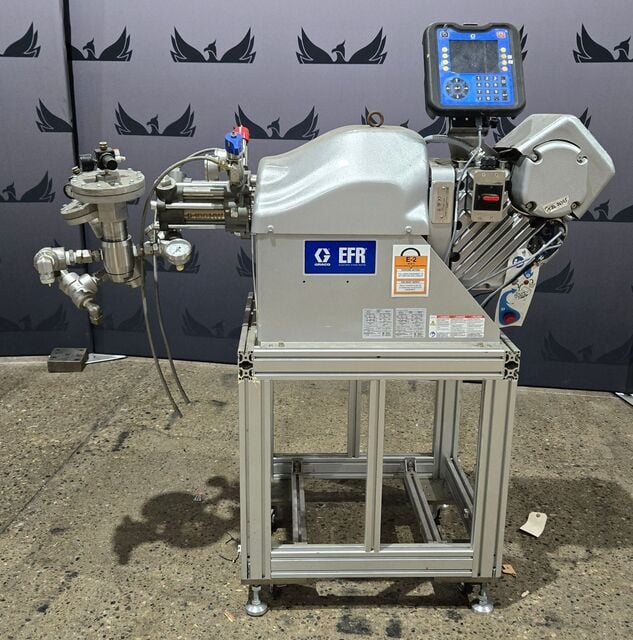
Graco #EFR-U83364, meter mix dispense system, 2 part adhesive
Sealers and Sealing Systems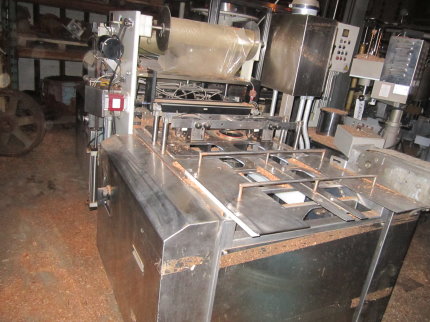
Pryor #99MC-HS/2, Tray Sealer, (22) 5.5" diameter trays, 1 HP, 1760 RPM, 230/460 V
Sealers and Sealing Systems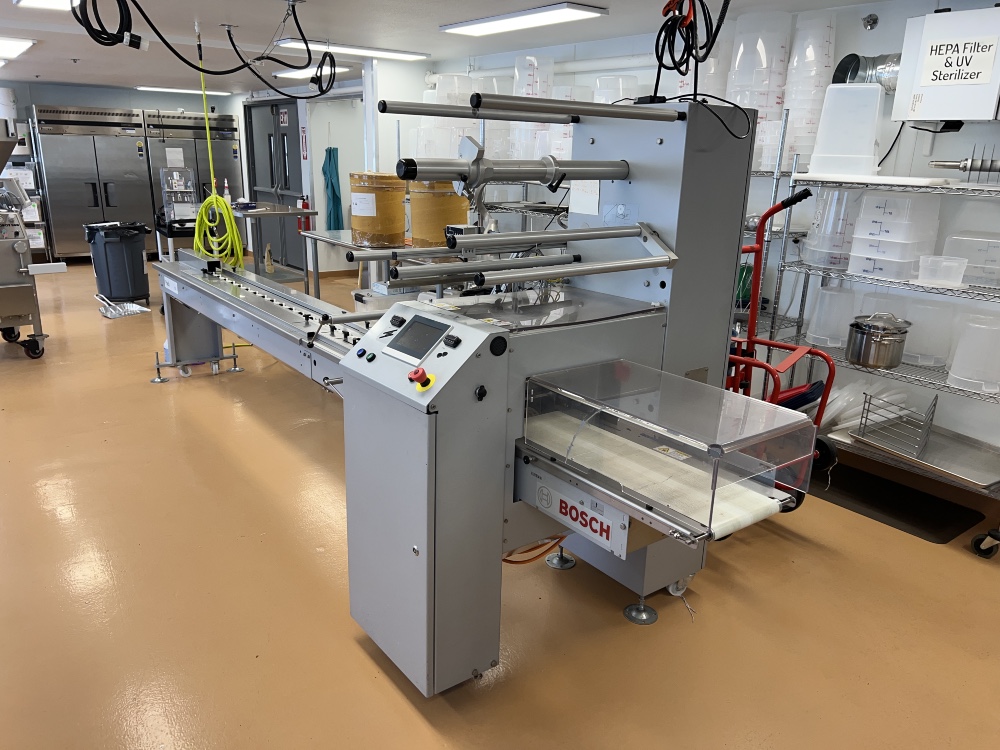
Bosch #Pack-101, Stainless Steel horizontal flow wrapper, 50-150 pieces per minute, low hours, 2015
Form Fill Sealing Machines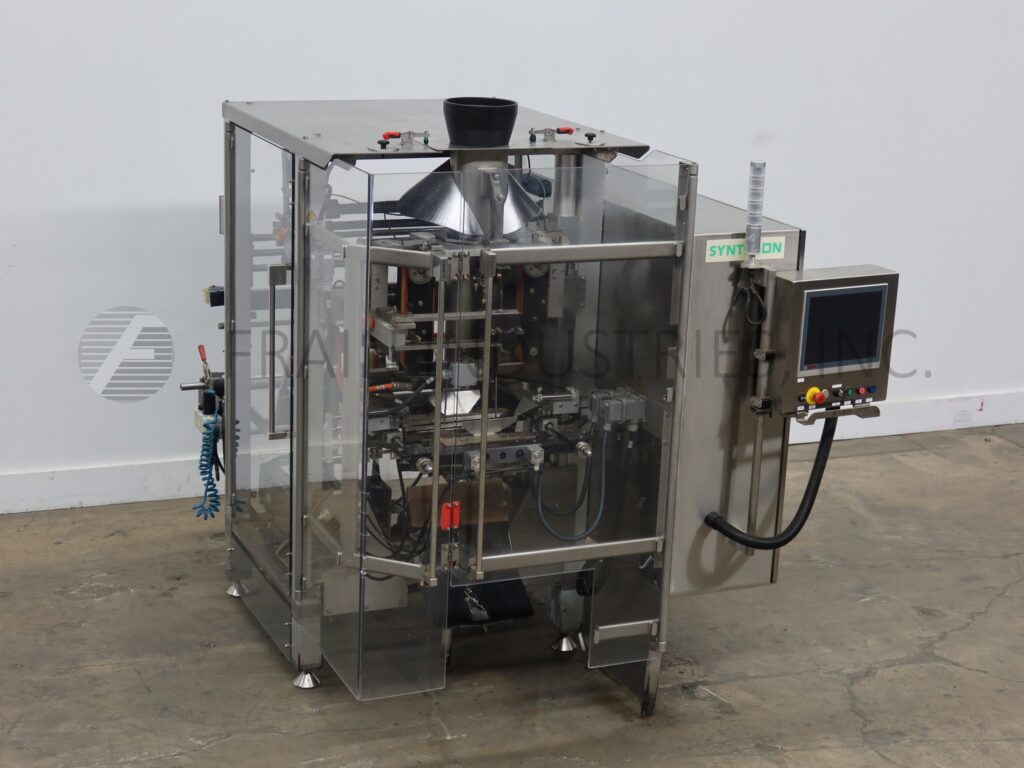
Bosch #SVE-3800, automatic, Stainless Steel, vertical form fill & seal machine, 20-100 packages/min
Form Fill Sealing Machines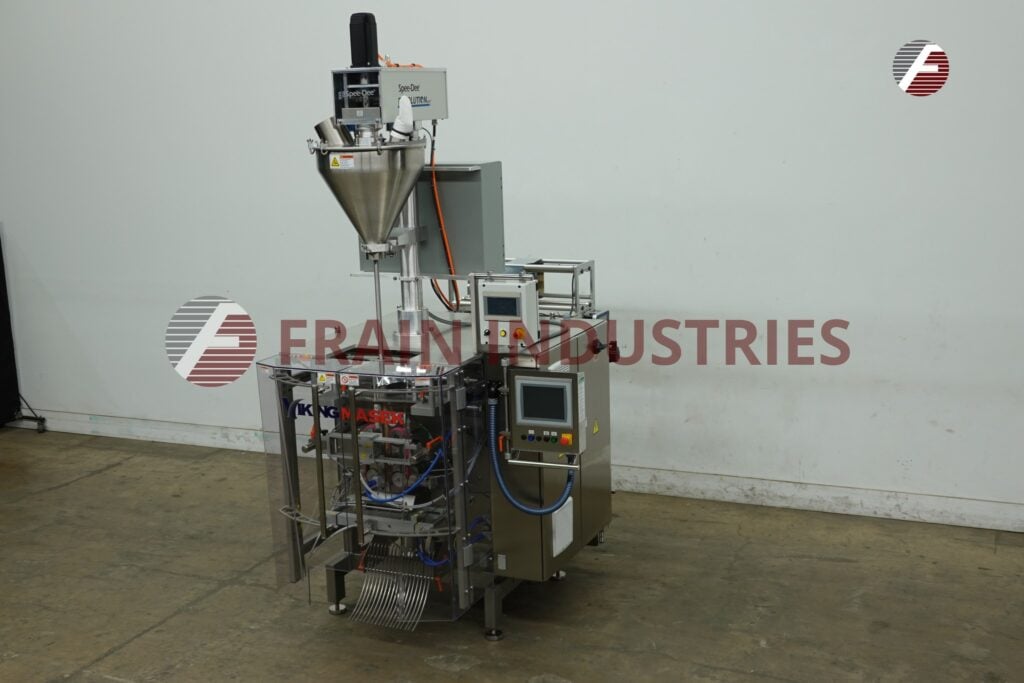
Viking Masek Global Packaging #M250/3800S, vertical form, fill, seal macihne, 10-100 cycles/minute (bags/pouches), mounted on Stainless Steel frame with height adjustable legs
Form Fill Sealing Machines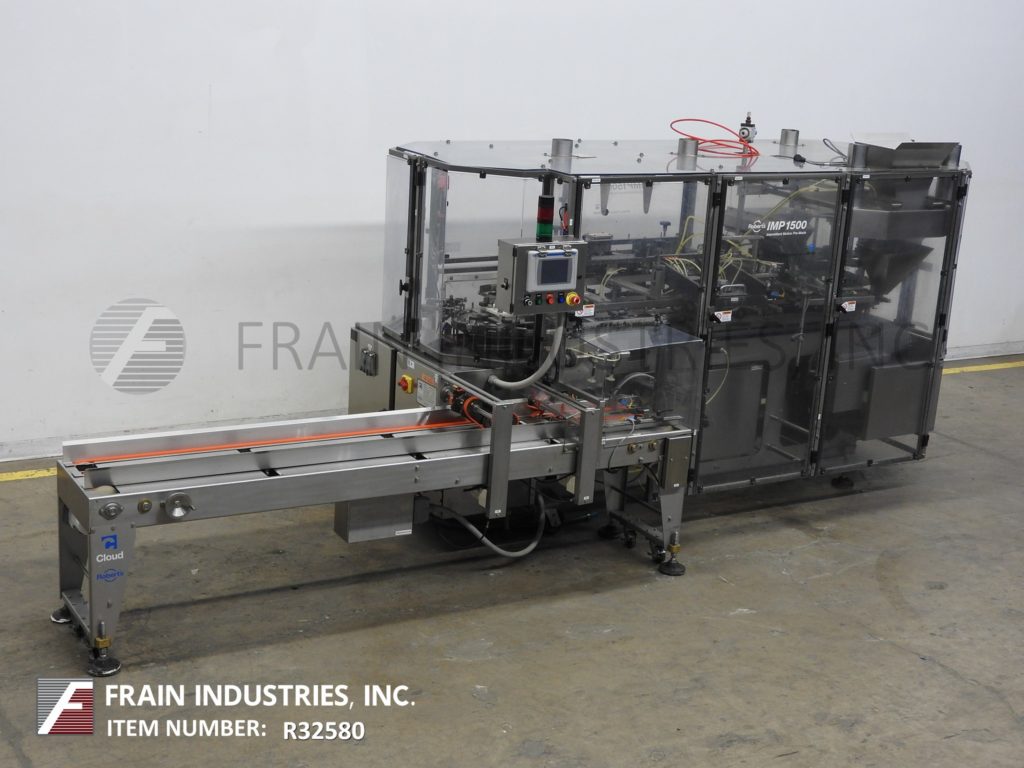
Cloud / Roberts #IMP-1500, automatic, intermittent motion, Stainless Steel, 10 station rotary, pre-made pouch filler and sealer, 10-50 pouches per minute, A/B controller
Form Fill Sealing Machines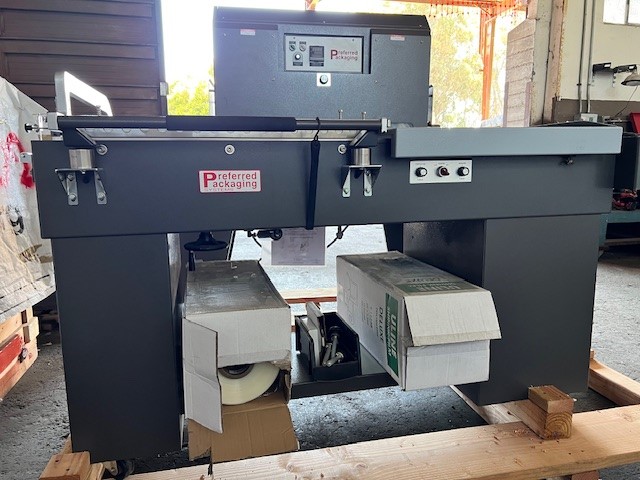
Excel #PP180844 and PP2028MK, L-bar sealer with heat shrink tunnel
Sealers and Sealing Systems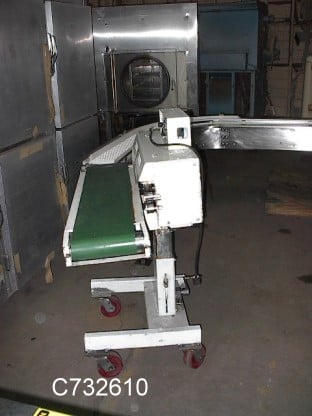
All-Line #V7/16V-SP, horizontal bag sealer, includes belt conveyor to convey bags through sealing jaws
Sealers and Sealing Systems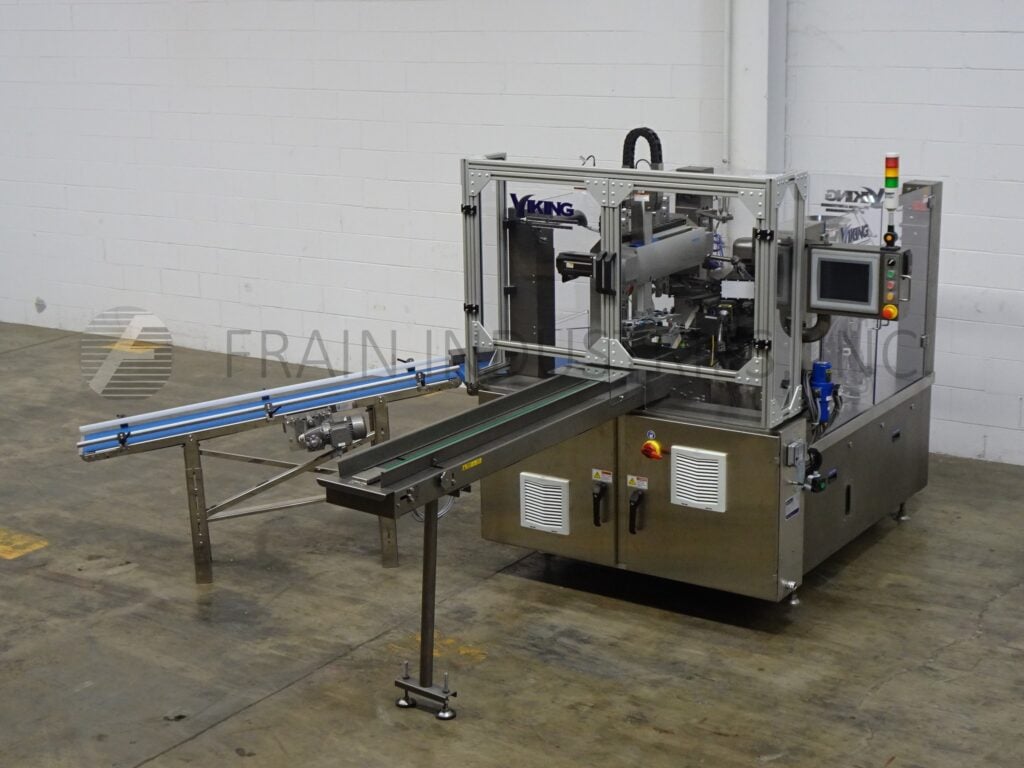
Viking Masek Global Packaging Masek Global #8S-235, automatic rotary intermit, up to 50 pouches/minute
Form Fill Sealing Machines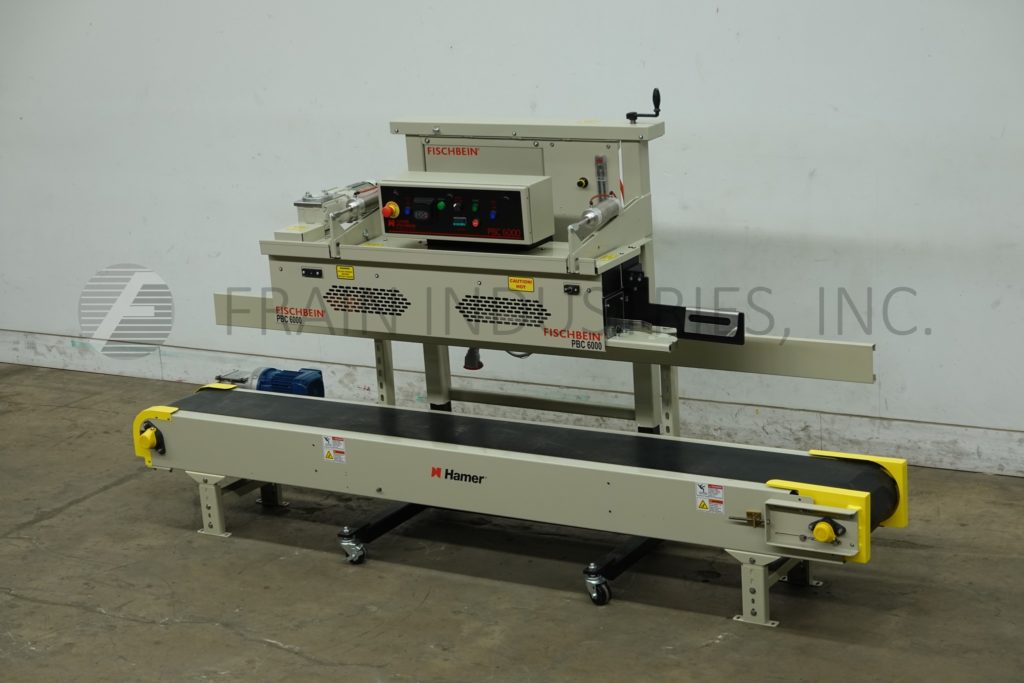
Fischbein #PBC6000, right to left, pre-applied glue, bag heat sealer rated from 0-85 linear feet per minute, mounted on hand crank height adjustable base frame with casters
Sealers and Sealing Systems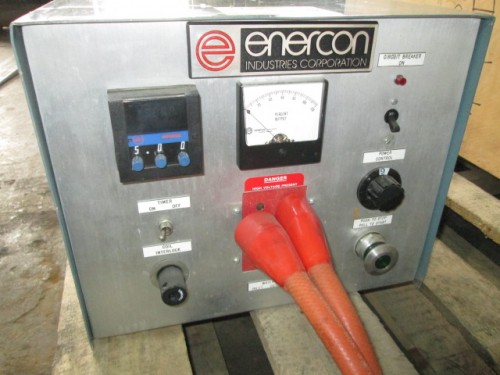
Enercon #LM2534-1, Induction Capacity Sealer, L1 kW, Hand held coil, 115 volts, .35 gpm minimum, 28-89 mm plactic caps
Sealers and Sealing Systems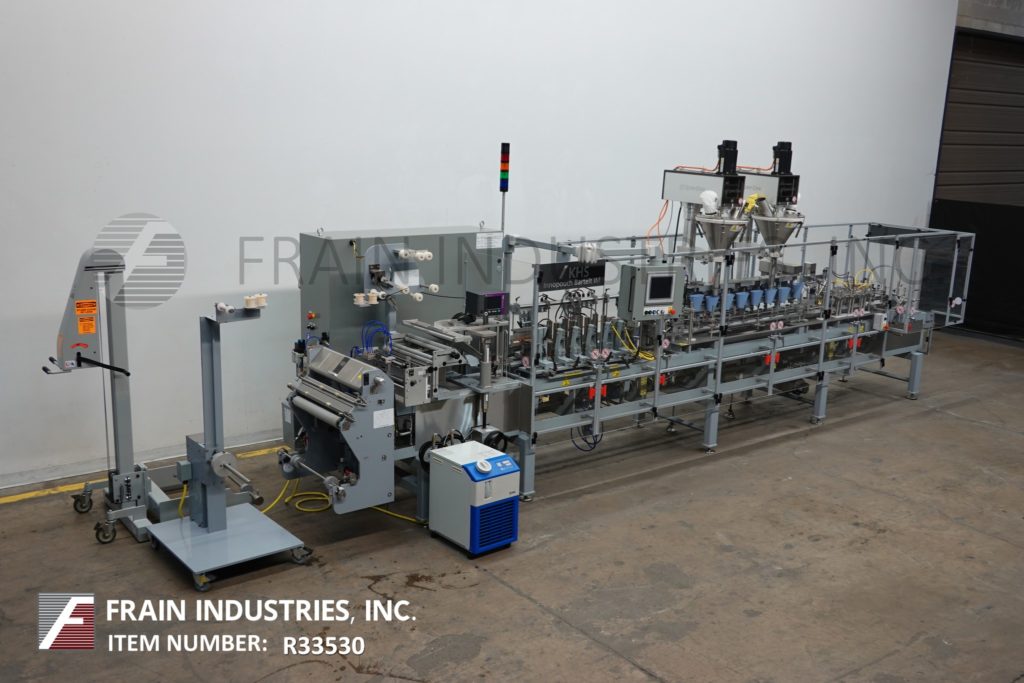
KHS / Bartelt Innopouch #IMF8-16, automatic, left to right, horizontal, intermittent motion, servo driven, flexible pouch, form, fill, seal machine rated from 20-110 pouches per minute
Form Fill Sealing Machines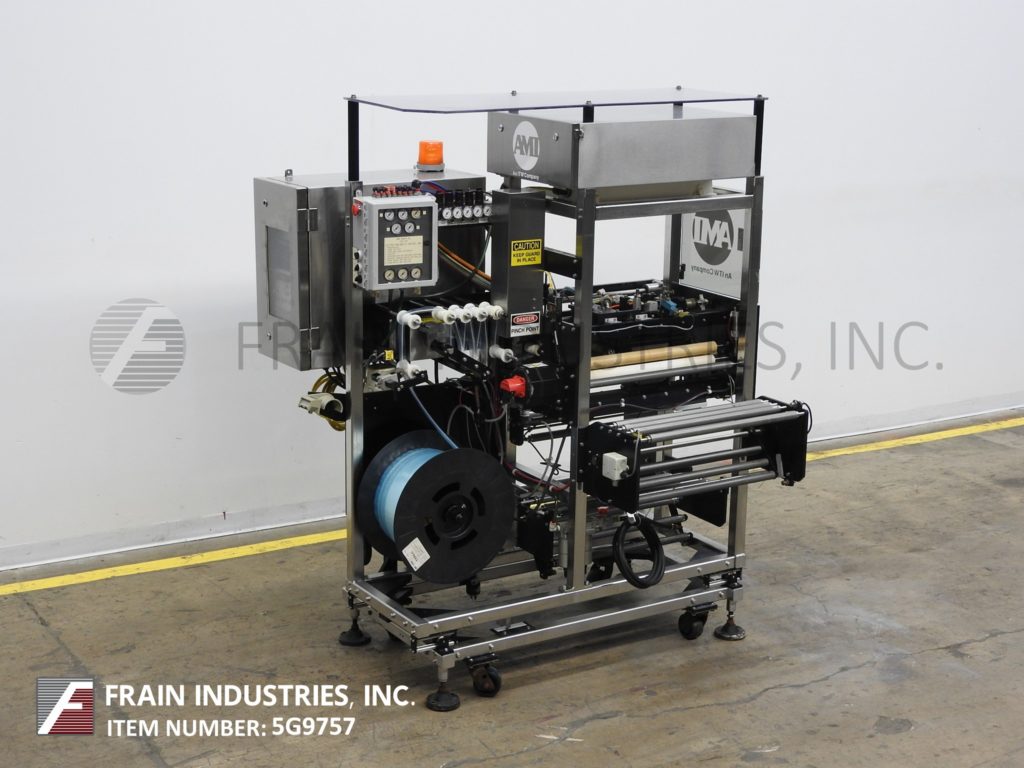
AMI / Zippak #D-25000-25, Top zipper applicator, 10-60 cycles per minute, used to apply a zipper closure to most vertical form, fill and seal machines
Form Fill Sealing Machines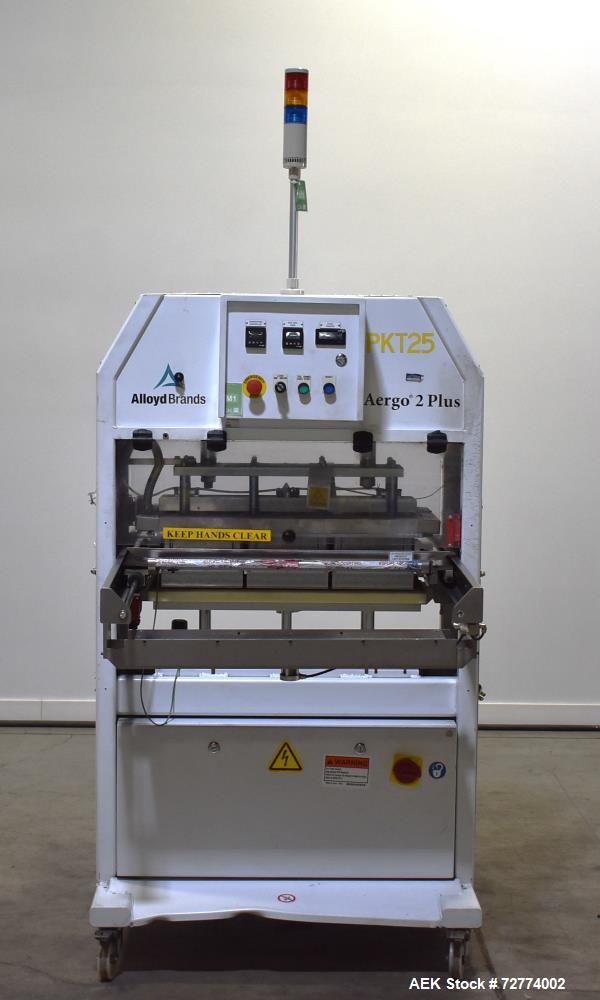
Find Your Next Packaging Machine
Start with the packaging job, then compare machines that fit your product, package sizes, and production goals. Browse Surplus Record’s packaging equipment categories and contact sellers about tooling, trials, and what is included.